


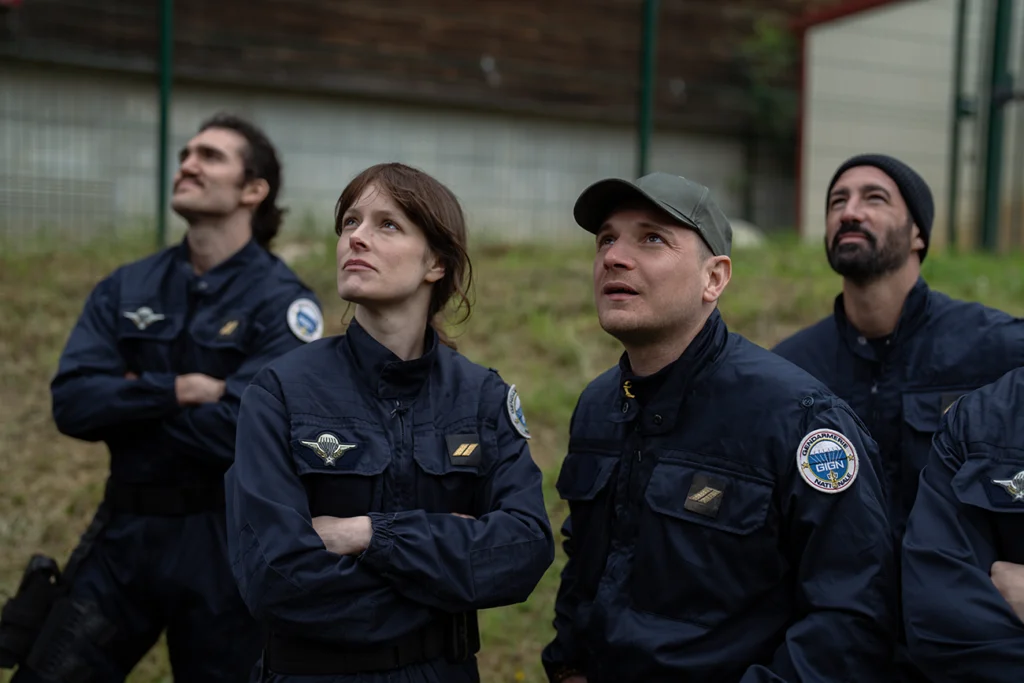
Action cinema thrives on decisions made in seconds and the price they take when the adrenaline wears off. “Ad Vitam” brings together Guillaume Canet, Stéphane Caillard and Nassim Lyes, directed by Rodolphe Lauga. Before looking at rushes and shocks, the narrative measures the wear and tear of a career in which courage becomes routine, until a domestic crisis reopens professional and emotional wounds. From there, the film investigates how much an unresolved past can disorganize any rescue plan and future. The question that guides the scenes is simple and direct: how much guilt a veteran bears while trying to protect the one he loves. This axis keeps an eye on bodies and the effects of hasty choices in familiar urban environments.
Guillaume Canet plays a former GIGN member who reacts less with words and more with physical calculation. The actor finds a balance between tiredness and obstinacy, suggesting experience without inflating gestures. Stéphane Caillard gives emotional density to his partner, avoiding the passive image that usually surrounds characters in danger. Nassim Lyes works as a threat vector and engine of persecution, without falling into caricature. When these poles confront each other, the scenes gain clarity of objectives, and the film benefits from the energy of those who know the terrain and act economically. Relationships are not decorative. Each character’s choices weigh on the following obstacles, creating a domino effect that sustains the tension until the last moves of the investigation.
Lauga favors action close to the ground, focused on effort, short breathing and improvisation. The camera follows changes in direction without confusion, avoiding cuts that break the notion of space. Locations in Paris, including residential areas and administrative buildings, become decision corridors with limited exits. Vincent Mathias photographs with harsh light and cold tones, highlighting isolation, fear and constant vigilance. The sound design avoids exaggerations, favoring dry impacts and silences that anticipate risks. Amine Bouhafa fills in the gaps with discreet pulses that don’t draw more attention than necessary. The set reinforces the idea that violence is work as well as exhaustion, and that the city does not forgive hesitations. This focus on legible movements helps keep the audience oriented even when the chase changes neighborhoods or levels of danger.
The narrative slows down at the core with a long return to the past. The resource gives context to the protagonist’s guilt and explains professional and emotional ruptures, but it stretches beyond the point. The immediate effect is a loss of momentum after an intense first half. The informative pause works as a brake and breaks the cadence built by the continuous action. When the plot returns to the present, the risks once again seem palpable and the alliances regain interest. Still, some of the air has already gone, and the film needs to regain attention by investing in more direct decisions and conflicts that put the characters on a collision course without unnecessary explanations. This reactivation happens, and the viewer once again sees clear consequences for each tactical and affective choice.
The editing by Marion Monnier and Yann Malcor seeks to maintain spatial continuity during fights and chases, avoiding the temptation to cut with each impact. In its best version, decoupage allows you to read who is threatening, where the next danger is coming from and what is the possible way out. There are passages in which the anxiety for intensity reduces the legibility of the movements, but the dominant pattern favors clarity. This option matches Canet’s performance, which works on short reactions, falls, stumbles and quick recoveries, reinforcing the image of a professional who has already felt his body failing and, even so, continues forward. Realism does not depend on excessive blood, but on the logic of cause and effect between environment, decision and injury. When this current remains visible, the voltage increases without any tricks.
The script explores themes of institutional guilt and a pact of silence between security forces, linking political interests to operational deviations that infiltrate everyday life. Instead of betting on far-fetched conspiracies, he prefers credible connections between offices and streets, which helps keep the story anchored. The text does not use speeches to resolve conflicts. Prefers short dialogues and actions that confirm or deny promises. When you need to explain too much, you lose focus on the immediate risk. When he returns to prioritizing choices on the field, he regains vitality. This movement defines the experience of “Ad Vitam” as a film in which the body thinks first and reason tries to follow without delay.
The technical elements support the proposal of a direct and physical thriller. The art direction values functional interiors and unglamorous exteriors, avoiding distractions with flashy scenes. The costumes follow a practical logic, with variations linked to the function and the moment. There is no effort to create an indestructible hero image. The protagonist makes mistakes, gets tired, miscalculates, corrects, and this cycle humanizes each confrontation. The antagonism mixes ambition and pragmatism, more interested in results than in speeches. This makes negotiations tense and less predictable, fueling curiosity about the next steps.
When the resolution approaches, the story resumes the priority of the here and now. The final steps organize consequences of choices made in the recent past and immediate present. The emotional bond that drives the protagonist returns to condition each risk taken, and the institutions exposed along the way reveal clear limits. Released in 2025, it became the most watched French production in the history of Netflix. The data reinforces the popular reach of a proposal supported by legible action, experienced actors and a city treated as a decision-making field with reduced margin for error.
Film:
To life
Director:
Rodolphe Lauga
Again:
2025
Gender:
Action/Crime/Drama/Mystery/Thriller
Assessment:
8/10
1
1
Marcelo Costa
★★★★★★★★★★

André Itamara Vila Neto é um blogueiro apaixonado por guias de viagem e criador do Road Trips for the Rockstars . Apaixonado por explorar tesouros escondidos e rotas cênicas ao redor do mundo, André compartilha guias de viagem detalhados, dicas e experiências reais para inspirar outros aventureiros a pegar a estrada com confiança. Seja planejando a viagem perfeita ou descobrindo tesouros locais, a missão de André é tornar cada jornada inesquecível.
📧 E-mail: andreitamaravilaneto@gmail.com 🌍 Site: roadtripsfortherockstars.com 📱 Contato WhatsApp: +55 44 99822-5750