
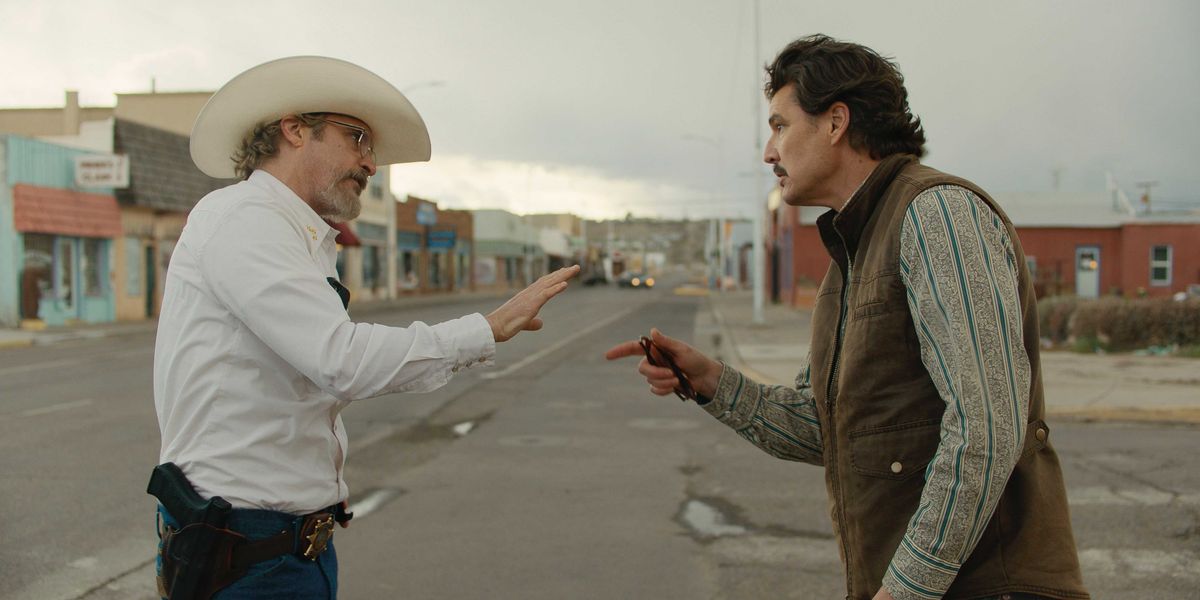
«Eddington» is the most politically incorrect film of recent years, capable of demolishing all mainstream dogmas with sharp jokes. From Covid to Black Lives Matter, Aster shows how fanaticism is tearing us apart, leading to the destruction of even good causes. «But what has this mayor done to reduce racial inequalities?». “He’s Hispanic.” It would be worth seeing Eddington, Ari Aster’s splendid new film, just for lines like this, subtle and razor-sharp, which are scattered here and there like little diamonds. With two sentences, the American director dismantled the entire rhetorical edifice on minorities built by progressives over the last ten or fifteen years. With another scene lasting just a few seconds, Aster demolishes the hypocritical strain of political correctness known as woke culture. We see a group of very young and excited protesters, mostly white, marching with Black Lives Matter slogans and demolishing the shop of a poor man who sells Native American memorabilia. The desperate man complains about being robbed of thousands of dollars of merchandise and a little girl shouts in his face: “Nazi!”. Nothing better than this could explain what ultra-left activism has been in recent years. Moments like these make Eddington the most politically incorrect film of this decade, and perhaps even previous ones. A refined and highly intelligent incorrectness, but also painful, because it mocks with the awareness of being commenting on a disaster. Not only that. It is also the first film – an incredible case indeed – that had the guts to talk about the Covid period and its ferocious divisions, and to do so without ridiculing (as the prevailing thought would have it) the critical positions of the restrictions. Again, Aster conveys all the pain of those years with just one scene: it shows an elderly man entering a supermarket without a mask. He just wants to go shopping, he says he can’t breathe with the bandage on his mouth. But there’s nothing to be done: the attendants push him out, while some well-masked customers film and applaud while railing against the old man. The images flow and the feelings of those days come back vividly and burn. Eddington starts from there, from the divisions over Covid. The sheriff of the New Mexico town (Joaquin Phoenix) is a good man and tried by life. He lives with his wife who has mental problems and with his mother-in-law who is paranoid and a conspiracy theorist. He tries to keep himself in balance, he doesn’t follow his mother-in-law’s exaggerations but he is firmly against the restrictions, and he can’t bear to see the hatred that the lockdowns and closures have caused. The mayor (Pedro Pascal) is Hispanic and progressive, a fanatic of “science tells us so”. The two inevitably come into conflict and from that moment the viewer begins a journey into prejudices: those of the West and their own. The film – unexpectedly – pushes us to empathize with the sheriff, makes us understand the profoundly human meaning of his opposition to the bans, makes him appear as a bastion of kindness in a valley of anger. At the same time, however, it ridicules certain extremisms that we all know and shows the slimy cynicism of some preachers and false projects of dissent. After all, this is the point of the film: to show how men manage to destroy good causes, how they are always ready to pursue their own petty interests to the detriment of others and how fanaticism is inexorably tearing us apart. Eddington undermines certainties, it is a gesture of rebellion against the dominant Manichaeism. Let’s take the figure of the mayor: good, progressive, open to the technological revolution. And then careerist, half corrupt, cynical and false. Yet even in him there are traces of humanity. As if to say that good and evil coexist in each of us, and that we can certainly side with a cause but the moment we forget human compassion everything irremediably collapses into hatred and devastation. After Covid comes woke. George Floyd dies and the anti-racist can-can begins. The two sheriff’s deputies, one white and one black, lose their bearings. The white man lets slip a great truth: “Before this I didn’t even pay attention to race.” The result is that demonstrations and clashes produce a more radical division: whites and blacks look at each other with suspicion. And then there are the kids. There is the mayor’s son, obviously Hispanic, who poses as a victim of systemic racism but is an arrogant privileged son of the rich. And then a white boy who starts talking too much about privilege and whiteness to be deconstructed just to follow a little girl he likes. The scenes in which these agitated white teenagers demand social justice by screaming in the face of a black police officer are the most shocking things cinema has given us in a long time. In Aster’s film there are no good or bad guys. It is a continuous surprise, a continuous change of perspective, a very serious warning: if we continue to demonize and despise those who think differently we will end up very badly. No one is saved because everyone claims to save themselves and tries to make their truth prevail by force. And basically, the director seems to tell us, suggesting various layers of occult plots that cannot be revealed without ruining the ending, we are all manipulable and manipulated. Angry divisions are a tool of power to keep us from realizing the real problems that afflict us. While we get lost in grotesque culture wars, the real masters of the world are having fun behind our backs. The West ends in Eddington, says Ari Aster, and he’s right. It’s up to us to decide whether we want to emancipate ourselves or remain prisoners of the poisonous province in which our minds love to lock themselves up.

André Itamara Vila Neto é um blogueiro apaixonado por guias de viagem e criador do Road Trips for the Rockstars . Apaixonado por explorar tesouros escondidos e rotas cênicas ao redor do mundo, André compartilha guias de viagem detalhados, dicas e experiências reais para inspirar outros aventureiros a pegar a estrada com confiança. Seja planejando a viagem perfeita ou descobrindo tesouros locais, a missão de André é tornar cada jornada inesquecível.
📧 E-mail: andreitamaravilaneto@gmail.com 🌍 Site: roadtripsfortherockstars.com 📱 Contato WhatsApp: +55 44 99822-5750