


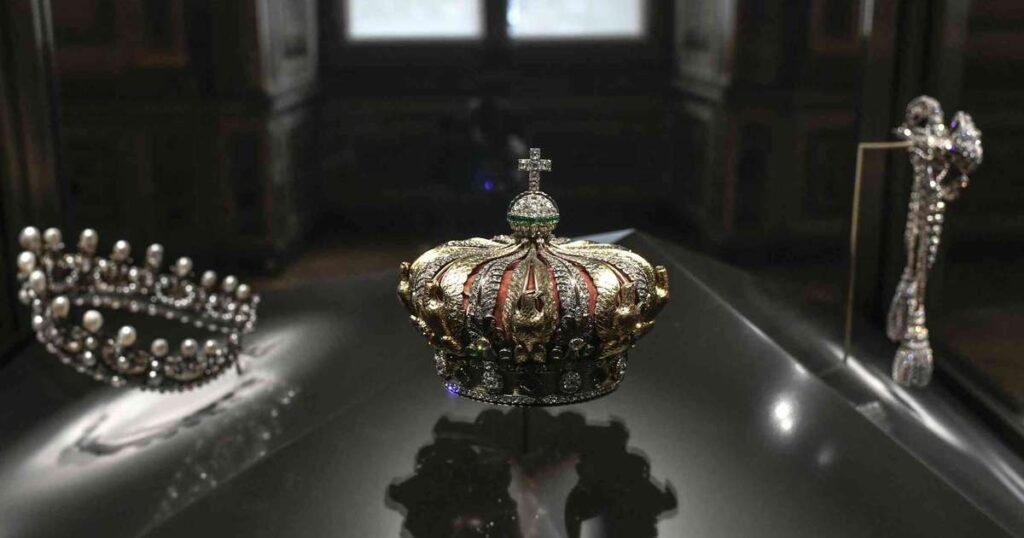
The largest art museum in the world, the Louvre has approximately half a million objects in its collection, with around 30,000 on display, and receives an average of 8 million visitors per year. That’s a big number on any scale, with a lot of people and objects to keep an eye on. And Sundays are particularly busy.
In a cleverly conceived operation, four men wearing fluorescent vests pulled up to the Louvre in a flatbed truck at 9:30 a.m. last Sunday, October 19, 2025. Quickly getting to work, they erected an extension ladder to the second floor. Climbing onto it, they cut out a window, entered the Galerie d’Apollon and, wielding power tools, helped themselves to nine exquisite objects.
The stolen objects were French royal jewelry, which belonged to Empress Eugenie, wife of Napoleon III and patron of the arts.
This is where it gets tricky for thieves: what to do with these priceless objects? They can’t use them—they’re too big and flashy to go unnoticed—and they can’t legally sell them because the images are all over the internet.

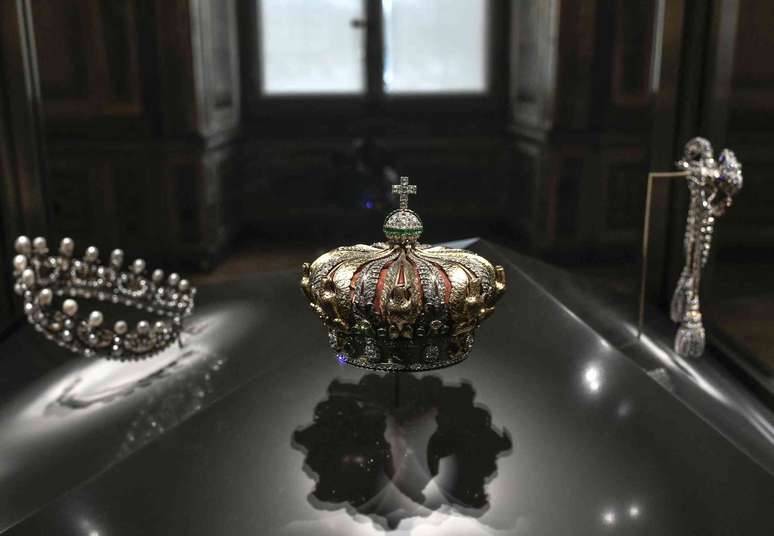
Empress Eugênia’s jewelry photographed in 2020. The diadem, on the left, and the bow-shaped diamond brooch, on the right, were stolen. The crown, in the center, was stolen, but later recovered.Stephanie de Sakutin/AFP via Getty Images
The best case scenario, from the thieves’ point of view, is to dismantle them, melt down the precious metals and sell the stones separately.
Empress Eugênia’s crown, which the criminals took and later dropped as they fled the scene on scooters, has eight gold eagles, 1,354 brilliant-cut diamonds, 1,136 rose-cut diamonds and 56 emeralds. In short, this is a large inventory of individual jewelry to try to sell.
Timing is everything
For the Louvre, any theft is a big blow. This calls into question the security of the site, both electronic and human. Five security guards were nearby and acted to protect the visitors, and alarms sounded, but the entire robbery was completed within seven minutes.
Timing is crucial in robberies.

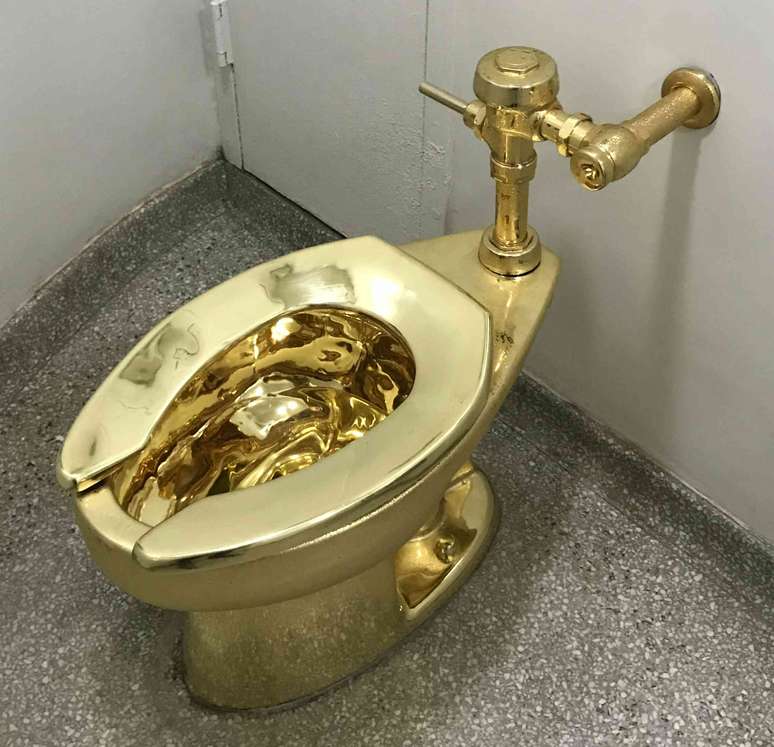
America, a fully functional toilet made of solid 18-karat gold, on display here at the Guggenheim in 2017.MossAlbtros/Wikimidia Commons, CC BY-SA
In 2019, an 18-karat gold toilet bowl titled America (2016), by artist Maurizio Cattelan, was stolen from Blenheim Palace in England. The robbery took five and a half minutes. The vessel weighed 98 kilos and was in full working order. In other words, the two men who took him (and were later arrested and served prison sentences for their crimes) worked quickly and efficiently. At the time of the robbery, the estimated value of the gold bars was around R$21 million.
Van Gogh’s quadn The Parish House Garden in Neunen in Spring (1884), was stolen from the Singer Laren Museum in the Netherlands during the COVID-19 closure in 2020. It was recovered in late 2023 following an investigation by Dutch art detective Arthur Brand.
The theft of two Gottfried Lindauer paintings from the Auckland International Art Center in 2017 took just a few minutes to complete. The thieves broke into the window of the auction house where the paintings, valued at around R$3.1 million, were displayed. The portraits were recovered five years later through an intermediary, with only minor damage.
Recovering what was stolen
A painting by Picasso from the National Gallery of Victoria, Woman Crying (1937), was famously stolen by the Australian Cultural Terrorists in 1986 – but the theft was only noticed two days later.
Recovered just over two weeks later, the painting was left for gallery staff to collect from a locker at Spencer Street railway station. The motivation behind the robbery was to highlight the lack of financial support given to Victorian artists, but the true identity of the thieves remains a mystery.
In 1986, 26 paintings with religious themes were stolen from the gallery of the Benedictine Monastery in New Norcia, Western Australia.
The thieves did not plan the robbery well: they did not take into account that three men and the stolen material would not fit in a Ford Falcon car. The paintings were cut from their frames, ostensibly damaged. One of them was completely destroyed. The thieves were arrested and charged.
Where would the thief go?
The recovery rate for stolen art objects is low. It’s impossible to quantify, but some say art recoveries worldwide are possibly as few as 10%.
Paintings are more difficult to sell — you can’t alter their physical appearance to the point where they are unrecognizable.
However, with objects like the gold toilet bowl or jewelry, the precious materials and gemstones can be reused. Time will tell if the Napoleonic jewels will be recovered.
But never say never. TO Mona Lisa (1503), undoubtedly the Louvre’s main attraction, was stolen in 1911 and recovered two years later. The thief, Vincenzo Peruggia, was an Italian handyman who worked at the Louvre and was caught trying to sell it.

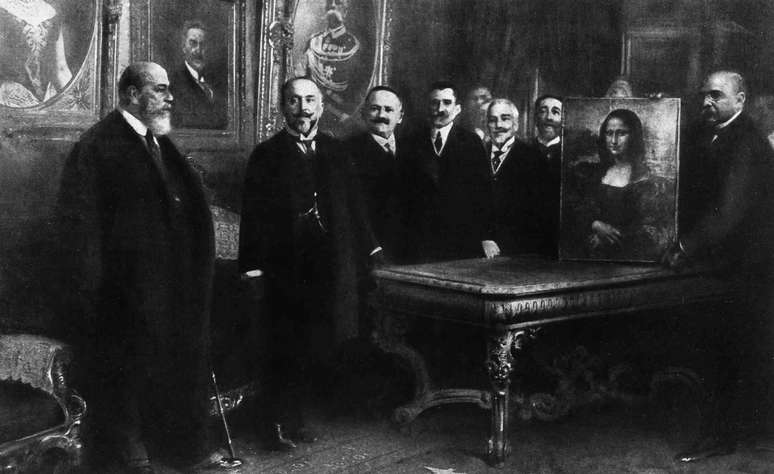
Return ceremony of Mona Lisa in France, Rome, 1913.Mondadori via Getty Images
This latest theft at the Louvre highlights the vulnerability of objects in public collections. The irony is that they are often donated to these institutions for safe keeping.
Those who guard the objects are often paid minimum wage and yet have a huge responsibility. When there are budget cuts, it’s often security staff that are reduced – like the Art Gallery of New South Wales’ announcement last week.
The Sunday thieves at the Louvre knew what they were looking for and why. We have no knowledge of their motivations. We know that stolen jewels are part of French history and are irreplaceable. Its theft prevents visitors from appreciating its beauty and craftsmanship individually, as well as collectively, in the context of French History.
But part of me can’t help but think about how partial the French were in appropriating works of art and precious objects belonging to others. So maybe this is a case of déjà vu.
Unseen: Art and Crime in Australia, by Penelope Jackson (Monash University Publishing), will be published in December 2025.


Penelope Jackson does not consult with, work for, own shares in or receive funding from any company or organization that would benefit from the publication of this article and has disclosed no relevant relationships beyond her academic position.


André Itamara Vila Neto é um blogueiro apaixonado por guias de viagem e criador do Road Trips for the Rockstars . Apaixonado por explorar tesouros escondidos e rotas cênicas ao redor do mundo, André compartilha guias de viagem detalhados, dicas e experiências reais para inspirar outros aventureiros a pegar a estrada com confiança. Seja planejando a viagem perfeita ou descobrindo tesouros locais, a missão de André é tornar cada jornada inesquecível.
📧 E-mail: andreitamaravilaneto@gmail.com 🌍 Site: roadtripsfortherockstars.com 📱 Contato WhatsApp: +55 44 99822-5750