


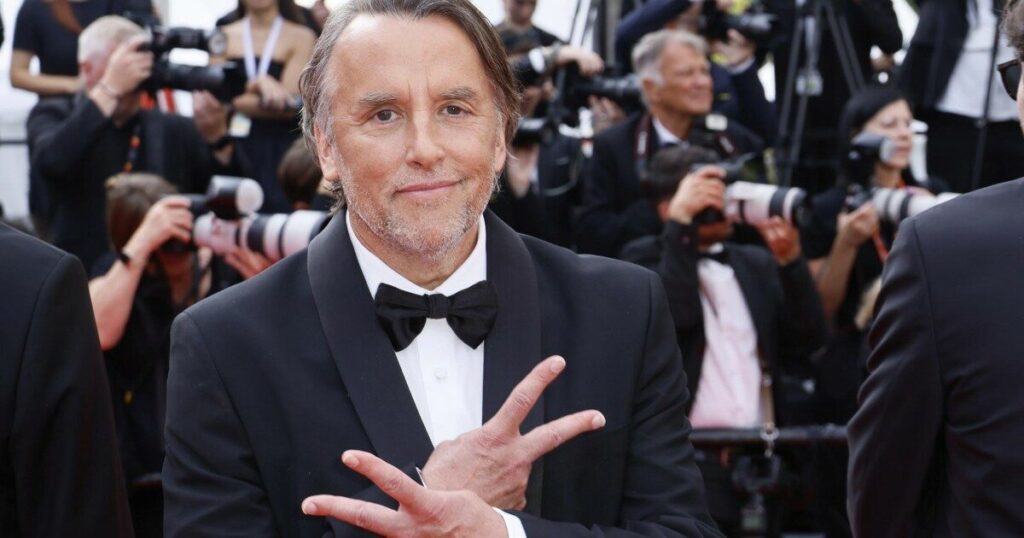
Come Terrence Malick e Wes Anderson he is Texan, and like his illustrious colleagues he seems more European than American. He loves “indie” cinema and is an absolute cinephile. Naturally the identikit can only lead to Richard Linklateramong the most anticipated guests at the 20th Rome Film Festival, for the lifetime achievement award and for the Italian premiere of his New wave, already competing in the last one Cannes Film Festival.
The filmmaker was also the protagonist of one Masterclass where he developed not only his career, but his way of understanding cinema. Raised in a small town in East Texas (“where the only thing attractive is a prison”) and then settled in Austin, Linklater began watching films “obsessively” at the age of 20 after realizing that “I wasn’t going to become a novelist.” Always interested in the “gaps” – the intervals, the voids – in every reality, the filmmaker born in 1960 explained the importance of his “gap” between the foundation of his Film Society and the beginning of my cinematographic career: “practically in that period I built a community of cinephiles around me, something that later proved to be fundamental for writing and directing my films. I continued and still continue to program films in the film club for 40 years”.
Intimately “indie” – independent – not only as a production, especially at the beginning of his career, but above all as a way of understanding the seventh art, he has always defended his way of making cinema that is so experimental and yet so connected to his audience. After all, for him “cinema is a very powerful medium for connecting with spectators, simply because you put them on the screen where they are reflected!”. But there is no doubt that his main interests in a film are storytelling and the dialogues, which sometimes appear like flowing monologues. Since his second full-length, Slacker (1990) where he himself puts himself on stage in the opening sequence by “monologuing” with a taxi driver through (apparently) senseless and certainly logicless digressions.
“This is because madness, being borderline, belongs very much to Texans: there is no better place to meet crazy people of all kinds!”. And the endless dialogues are an integral part of his masterpiece trilogy, that of “Before”: Before dawn (Before Sunrise, 1995), Before sunset (Before Sunset, 2004) e Before midnight (Before Midnight, 2013) co-written and starring the unforgettable pair Ethan Hawke-Julie Delpy. “I tend to listen and write a lot, I like actors, I don’t want to pontificate on them. And this, perhaps, has made long-lasting collaborations with them possible (especially with Hawke, ed.). Above all, I am interested in the management of time, of its flow, to see people grow, change, become themselves.” In fact, the trilogy, initially not planned as such, expands over about 20 years, in which Linklater’s famous “gaps” are identified with a paradox. That is, “that I leave out, I leave in the gaps, the things that matter in life, the momentum so to speak, instead giving space to minority elements, to details, to daily, albeit fragmented, issues”.
In this sense it is an absolute masterpiece Boyhood (2014), a dramatic work shot over 12 years that tells the story of the “growing up” of a child aged 6 to 18. “With Boyhood I had solved this curiosity of mine but I had created a new problem for myself: how to finish a film in 12 years? It was hard, but we did it. Every time we met with the crew and actors we had to go back to “playing” with spontaneity.”
Over time it is clear that the studios have noticed directorial talent. Here comes “blockbuster” like School of Rock (2003) with his friend and companion Jack Blackbut it is clear that although full of stars, Linklater’s cinema remains genuinely independent in its own right mindsetthat is, in his “mental form”. With characters, moreover, very connected from film to film. Even those of New wavewhere in 1959 the “young Turks”, animators of the very famous Cinema Notebooks – Godard, Truffaut, Chabrol, Rivette, Rohmer etc.. – they think about the forms of cinema, revolutionizing it from within and without. “That was the greatest revolution in cinematographic language and seeing them, so young and enterprising, I thought about how even in my small community we were full of enthusiasm and desire to tell stories”.

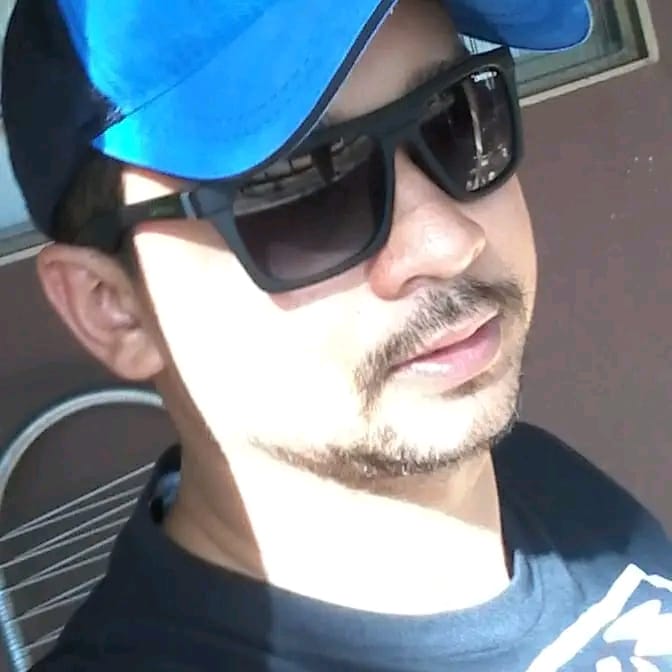
André Itamara Vila Neto é um blogueiro apaixonado por guias de viagem e criador do Road Trips for the Rockstars . Apaixonado por explorar tesouros escondidos e rotas cênicas ao redor do mundo, André compartilha guias de viagem detalhados, dicas e experiências reais para inspirar outros aventureiros a pegar a estrada com confiança. Seja planejando a viagem perfeita ou descobrindo tesouros locais, a missão de André é tornar cada jornada inesquecível.
📧 E-mail: andreitamaravilaneto@gmail.com 🌍 Site: roadtripsfortherockstars.com 📱 Contato WhatsApp: +55 44 99822-5750