


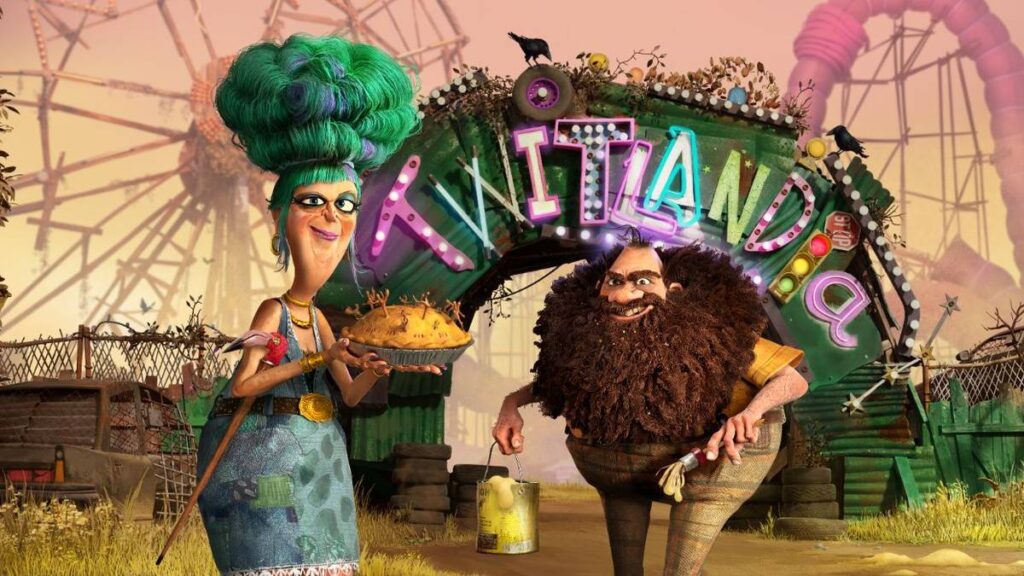
It’s pretty remarkable that it’s taken us this long to get a movie of Roald Dahl‘s 1980 children’s classic, The Twits. The characters are staples of his wonderful world of fiction, and since the 1970s, we’ve been getting film adaptations of his works. Some have even been made several times over. There has rarely been a miss when it comes to Roald Dahl movies, and thankfully, the same can largely be said for The Twitsbut you can’t help but wonder whether Dahl’s morbid sensibilities fit into the 2020s. Or, moreover, wonder why filmmakers are so averse to staying true to his tone and vision, especially when generations of readers, and indeed viewers, have always gravitated towards Dahl for the way he filled that particular niche. Surely a loyal adaptation of his work would be an easy success for production companies, but apparently, it’s not that simple.
What Is ‘The Twits’ About?
Mr. and Mrs. Twit (voiced splendidly by Johnny Vegas and Margo Martindale) are a wretched married couple who hate each other and spend their time pulling nasty pranks. They build a ramshackle amusement park named Twitlandia, which is promptly condemned, and the nearby town of Triperot is long past its glory days as a tourist destination, now experiencing poverty and terrible living conditions. As in any such movie setup, there is an orphanage full of bright-eyed little sprites who believe their parents will come to claim them and the sun will come out tomorrow and all that good stuff. Two of these orphans, Beesha (Maitreyi Ramakrishnan) and Bubsy (Ryan Lopez), venture to Twitlandia and discover the Muggle-Wump family of colorful monkeys, who are being kept as slaves so the Twits can power their park with their magical tears.
The kids bust the Muggle-Wumps out of there, incurring the wrath of the Twits, who go to increasingly ridiculous lengths to take some form of revenge. Those familiar with the book will recall it as a brief, silly ditty that focuses on the tricks the Twits pull on each other, and the efforts of the animals (many of whom are unaccounted for in this movie) to escape their clutches and get one over on their captors. Human children feature briefly as victims of Mr. Twit’s glue trap, but otherwise it is a showdown between a cartoonishly despicable couple and a gang of intelligent animals. It is so short and simple a story that it admittedly may have been difficult to spin out into feature length, and that is where this film adaptation falls short, by padding out the skeleton with a bunch of unwelcome staples of the family animation genre.
‘The Twits’ Doesn’t Stay Faithful to Roald Dahl’s Nasty Style
The story is watered down here by the inclusion of the child protagonists. It is undeniable that the appeal of Dahl’s work was that it offered all the wacky, uncouth, and grim curiosities that young readers actually found exciting, with outlandish characters and settings, and often unpleasant turns. People died in horrible ways, the good didn’t always prosper, and villains were just straight-up bad guys. It’s perhaps unsurprising that the film adaptations did so well in the ’80s and ’90s, back when family cinema was infamously dark and daring, and didn’t think twice about giving young viewers nightmares. Of course, in the 2020s, family cinema has taken on a sheen of artificial pleasantness, and this isn’t necessarily a bad thing. Entertainment is escapism, and in a cruel world such as this, we want some movies to offer us a reprieve from all the nastiness around us, but that shouldn’t account for the whole genre, especially when it comes to young audiences, and such movies often abandon all logic and narrative cohesion for the sake of getting the characters to their soppy conclusion.
Beesha and Bubsy’s storyline is the weak link of this Roald Dahl adaptation, acting as the antidote to the tone of the source material. The children are notably designed with much less imagination than the other characters, both human and animal. They look like any CGI kids from any CGI movie, and to be honest, they act like them, too. She’s the big sister type who protects the younger ones but secretly yearns for love and to be cared for herself, and he is just the cute kid. These two drag this fabulously bitter little story, kicking and screaming, from a firmly Dahlesque world to your average family viewing one, and it’s not necessary. Let all the other generic kids’ movies teach them about hope and family and believing in yourself, but keep Dahl’s work and memory sacred by respecting the spirit he is remembered for. The story is named for the Twits, after all, and they are brilliantly brought to life, with fantastic voice work and engrossing character design (although Mrs. Twit has gone through something of a makeover, now going for more of a washed-up ’80s Vegas escort look than the grubby old villain Quentin Blake drew her as). The story is really about them and the animals, and it should have been kept as such.
Lively Animation and Performances Save ‘The Twits’

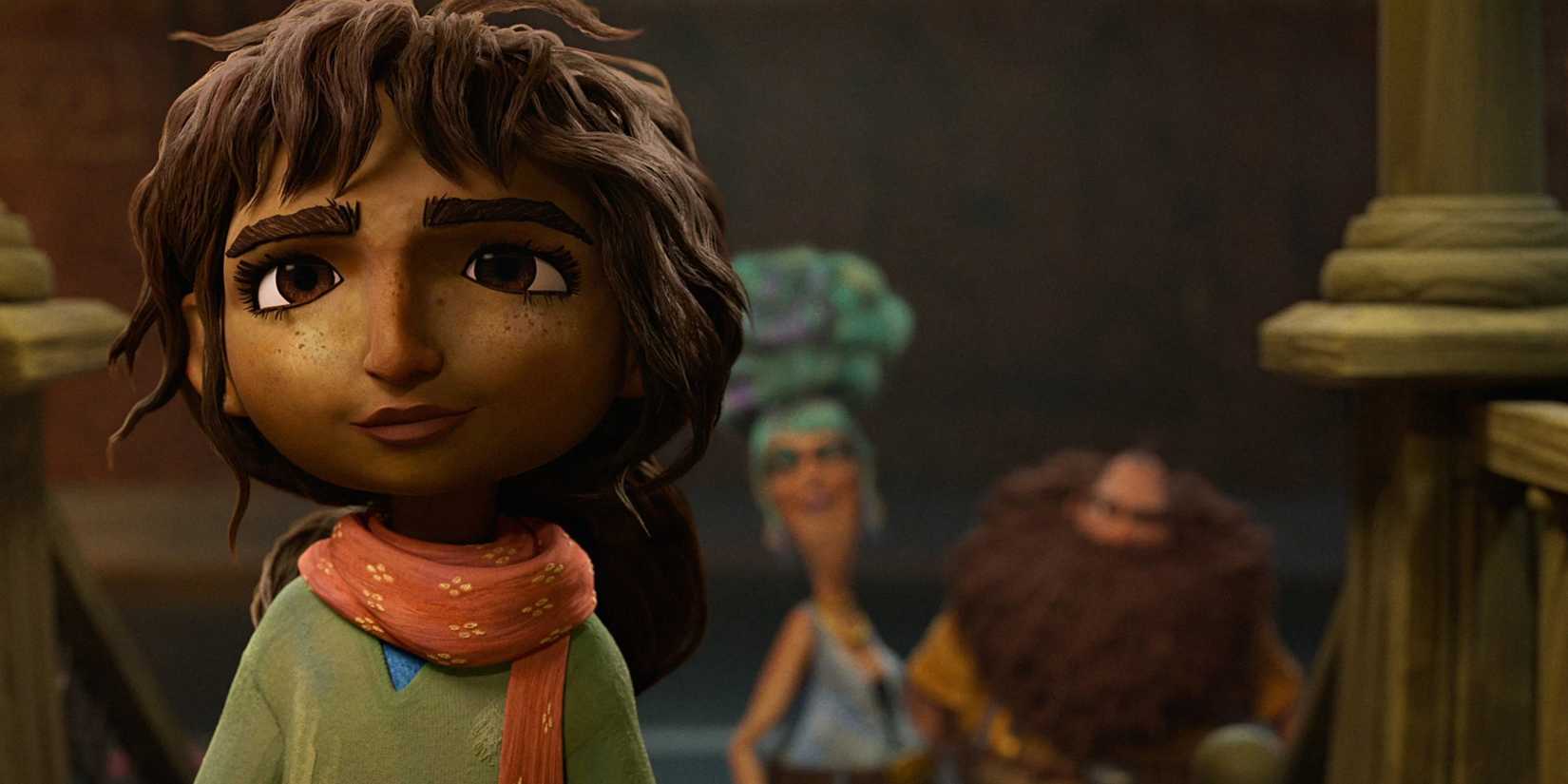
Thankfully, the inclusion of the sickly sweet kids’ story does not entirely mar this adaptation, and there is a lot to enjoy here. The animation and design of the world is top-notch, and it is the final production of Jellyfish Pictures, an animation company that worked on films like Dog Man and If Fu Panda 4which sadly folded earlier this year due to rising costs. Dahl’s words are basically synonymous with Blake’s illustrations, so anyone who dares take on an adaptation of his books needs to live up to the visual style as much as the narrative one. The Twits does a great job of building a world that is simultaneously charming and seedywhere animals talk and orphans live happily ever after, but corrupt politics and poverty are still very real considerations. It’s got that grimy edge that it needs, but not enough of it.
There was an uproar a couple of years ago at publishing houses editing many beloved works of literature to be more aligned with modern sensibilities, and Dahl’s works were among the victims. He said in his lifetime that he wished his art to be left precisely as he made it, and he was right to do so. Sure, calling somebody fat or barmy might no longer be the politest thing to do, but these works were exactly what the artist intended them to be, and for decades, they were good enough for the rest of us. They also serve as unique capsules of the place and time they were created in, and for that alone, they should be preserved. This long-awaited adaptation of The Twits loses its character too much in modernity, but it is probably about as good as we could hope forgiven how much the world has changed since Dahl wrote it 45 years ago. It’s funny, it’s zany, it looks good, and has some really great character work going for it, but it probably would have turned out better as a product of the 20th century.
The Twits is now streaming on Netflix in the U.S.


- Release Date
-
October 17, 2025
- Runtime
-
98 minutes
- Director
-
Phil Johnston
- Writers
-
Kirk DeMicco, Phil Johnston, Meg Favreau, Roald Dahl
- Producers
-
John H. Williams, Julie Lockhart, Mary Coleman, Lara Breay, Elisabeth Murdoch
- The animation and world building are colorful and energetic.
- The voice cast deliver lively performances, particularly Johnny Vegas and Margo Martindale.
- The humor lands, and is relatively in keeping with Roald Dahl’s style.
- The child protagonists drag an interesting concept back to the traditional confines of modern family film.

André Itamara Vila Neto é um blogueiro apaixonado por guias de viagem e criador do Road Trips for the Rockstars . Apaixonado por explorar tesouros escondidos e rotas cênicas ao redor do mundo, André compartilha guias de viagem detalhados, dicas e experiências reais para inspirar outros aventureiros a pegar a estrada com confiança. Seja planejando a viagem perfeita ou descobrindo tesouros locais, a missão de André é tornar cada jornada inesquecível.
📧 E-mail: andreitamaravilaneto@gmail.com 🌍 Site: roadtripsfortherockstars.com 📱 Contato WhatsApp: +55 44 99822-5750