
The Louvre, the most famous museum in the world, closed its doors to visitors after a cinematic robbery last Sunday (19), when thieves used a freight elevator to enter the place and take nine jewels from the French royal collection. The episode raised awareness about the security of museums responsible for exhibiting pieces belonging to monarchs with historical and heritage value.
In Paris, only the crown of Empress Eugénie de Montijo, wife of Napoleon III, was recovered after being left behind by the suspects during their escape. The 19th century piece has 1,354 diamonds and 56 emeralds.
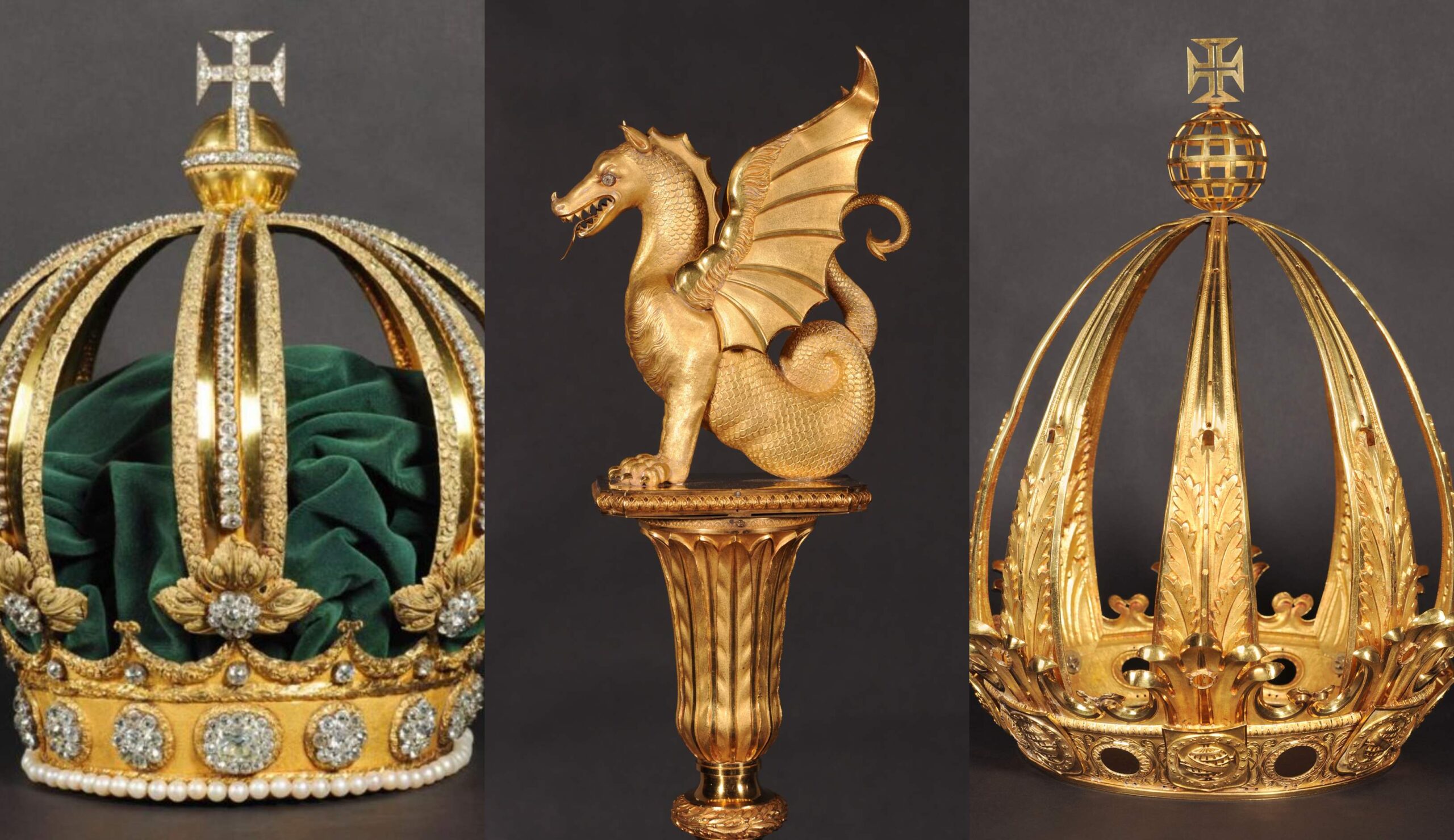
In Brazil, the Imperial Museum, located in Petrópolis, in the mountainous region of Rio de Janeiro, houses the main crown jewels of the royal family, which ruled the country in the 19th century. Among the pieces are the crowns of Dom Pedro I and Dom Pedro II and the imperial scepter.
According to information from the museum, the Imperial Palace of Petrópolis was built by D. Pedro II between 1845 and 1862 as a summer house and became one of the most important historical heritage sites in Brazil. Today, the headquarters of the Imperial Museum preserves around 500,000 items related to the Empire period.
Among documents, works of art, pieces of clothing, personal objects and diplomatic items, only 10% of the collection is on display in the permanent public exhibition, distributed in thematic rooms. Among the most valuable pieces displayed are:
- crown of D. Pedro I (1822): made of chiseled gold by the goldsmith Manuel Inácio de Loiola, measuring 36.5 cm high and weighing 2.689 kg.
- crown of D. Pedro II (1841): made by Carlos Marin, goldsmith of the Imperial House, with 639 diamonds and 77 pearls, weighing 1.955 kg.
- imperial scepter: displayed in the Hall of Insignia, the scepter used by both emperors was made of gold and diamonds, measures 2.51 meters and has a massive dragon at the top, a symbol of strength and sovereignty.
- golden feather: Princess Isabel signed the Lei Áurea, on May 13, 1888, with the piece, which became one of the greatest icons of the abolition of slavery in the country.
- majestic suit: D. Pedro II’s ceremonial cloak is made with toucan crop feathers and embroidered in gold with stars, armillary spheres, dragons and floral motifs.
Crown of Dom Pedro II was valued at US$ 14 million
In 2007, gemology specialist Jane Gama valued D. Pedro II’s crown at US$14 million due to the presence of diamonds in the relic forged in yellow and green gold. “The piece stands out for the presence of 639 diamonds in antique cut, totaling an impressive sum of 500.32 ct (carats). A true testament to the opulence of the imperial period”, recalls Gama in a post made two years ago on social media.
“After a meticulous analysis, I was able to determine that the crown has a market value of over US$14 million. However, its inestimable value also lies in the rich tapestry of history, culture and heritage that it represents for Brazil, making it truly irreplaceable”, he adds.

Museum has new security system to protect the crown jewels
Installed from the end of 2023, the Imperial Museum’s new security system began to monitor the site with smart cameras without interruptions in monitoring. Furthermore, the institution began to control the entry and exit of visitors by counting the number of people who pass through the historic building daily.
“A camera with video analytics was installed in the Crown Room to achieve more effective monitoring of the space at any time of the day or night”, informed the company Alca Network in announcing the project. Wanted by People’s Gazettethe company responded that it is not authorized to talk about the topic.
According to the publication, monitoring the flow of people allows planning at times with greater public service demands, which brings security to the administration and also to visitors. With entry and exit data, the system also allows the manager to confirm whether there are any visitors inside the museum when the historic building closes. Furthermore, the external patio, which already had a camera, had enhanced surveillance with analytics to further protect the area and generate data.
Wanted by People’s Gazettethe director of the Imperial Museum, Maurício Vicente Ferreira Júnior, said that he could not disclose details of the security system, but replied that the institution’s technical teams “have achieved prestige and international recognition, having provided numerous consultancies” for museums, historic houses and cultural entities.
“It is worth noting that the collection and collections under the responsibility of this museum unit are in an excellent state of conservation, safe, treated and monitored in order to guarantee their physical integrity so that Brazilians and other audiences in the future can enjoy the cultural heritage”, he stated.
SEE ALSO:
-
The city where the three largest diamond stones in Brazil were found
Visits with slippers to protect the palace’s original flooring
Due to the celebrations of the bicentenary of the birth of D. Pedro II, which will be celebrated in December 2025, some galleries will remain temporarily closed to visitors. According to the Imperial Museum, the exhibition of D. Pedro II’s crown is also suspended for maintenance of its showcase.
In addition to security, the organization of the place requires care from visitors, who cannot take photos with flash because of the risk to artwork displays and they still need to take off their shoes to enter the museum. Slippers are distributed to visitors with the aim of protecting the original palatial floor.
With the Proclamation of the Republic in 1889, the royal palace was converted into an educational institution before becoming the Imperial Museum. First, it housed the Notre Dame de Sion college (1893-1908). It then became the headquarters of Colégio São Vicente de Paulo (1909-1939). The building was officially transformed into a museum by decree signed in 1940 by President Getúlio Vargas, after the transfer of furniture and historical objects from the old palace. The Imperial Museum opened on March 16, 1943.

André Itamara Vila Neto é um blogueiro apaixonado por guias de viagem e criador do Road Trips for the Rockstars . Apaixonado por explorar tesouros escondidos e rotas cênicas ao redor do mundo, André compartilha guias de viagem detalhados, dicas e experiências reais para inspirar outros aventureiros a pegar a estrada com confiança. Seja planejando a viagem perfeita ou descobrindo tesouros locais, a missão de André é tornar cada jornada inesquecível.
📧 E-mail: andreitamaravilaneto@gmail.com 🌍 Site: roadtripsfortherockstars.com 📱 Contato WhatsApp: +55 44 99822-5750