
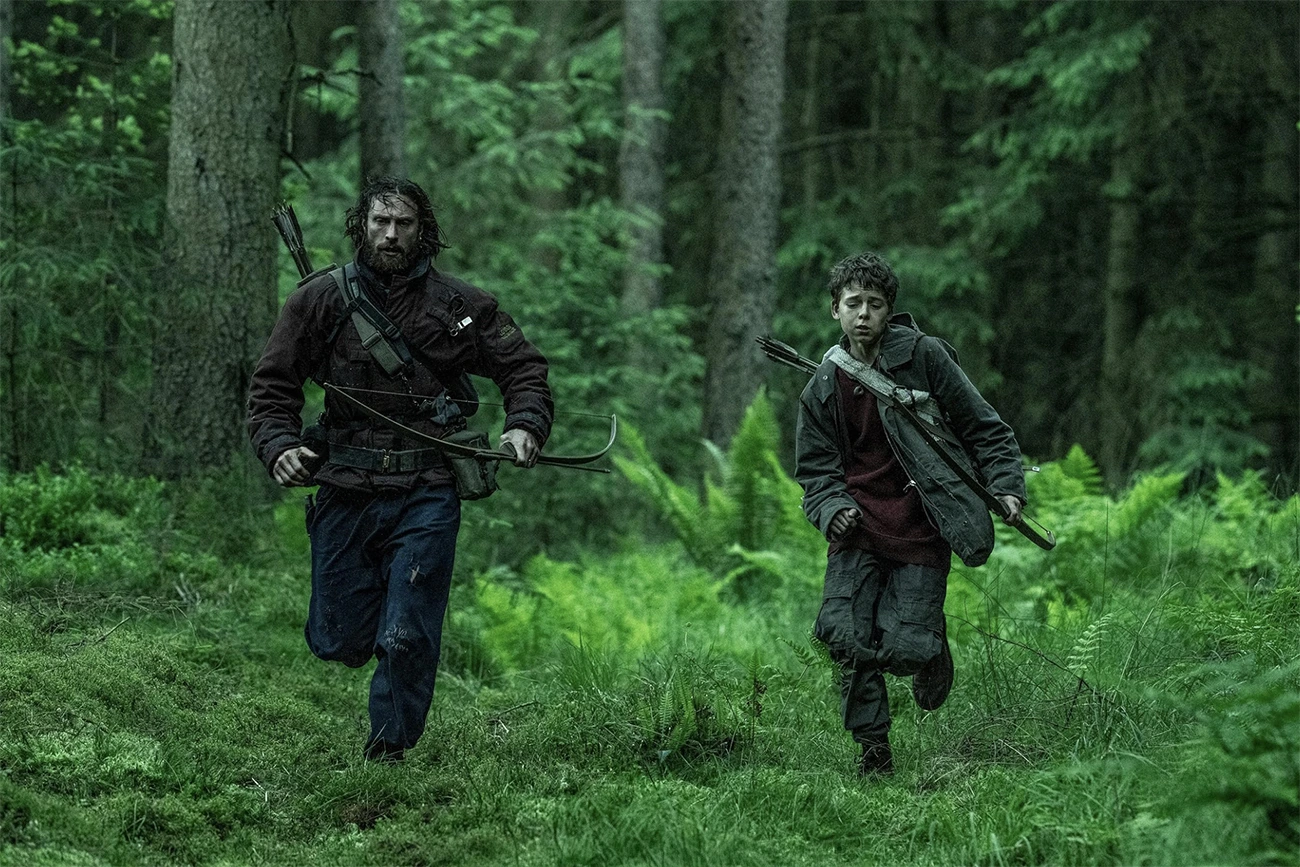
Few films start as well and end as lost as “Extermination: The Evolution”. The first act is a stunner: the nervous camera, the dirty shots, that sweaty and instinctive chaos that we recognize from afar. There’s an elegant brutality there, a sense that the world has ended, but the direction still has something to say about what’s left. The scenario is devastating, the tension is palpable, and the infected return to being what they should have been from the beginning: the distorted mirror of our own anger. It’s the kind of cinema that grabs you by the throat and reminds you of the primal pleasure of being afraid. Too bad the charm is short-lived. Forty-five minutes, to be exact.
Because as soon as the film decides to “get serious”, it falls apart. The visceral horror gives way to a kind of saccharine family drama, complete with a sick mother, a confused son and moral dilemmas that sound imported from a poorly edited soap opera. The problem isn’t the tone, it’s the imbalance. The story seems to have passed through so many hands that it has lost its identity: half apocalyptic thriller, half improvised therapy session. What was once tension turns to boredom, and the characters begin to make decisions so absurd that not even the virus could explain them. Suddenly, that claustrophobic and violent universe transforms into a large field of narrative absurdities.
The script stumbles in every attempt to build depth. It introduces new types of infected, stronger, taller, more… athletic? Without bothering to explain why. One is born alpha, another gives birth (yes, literally), and the viewer is left wondering if they have fallen into a parodic spin-off of “The Walking Dead”. There is also the so-called “political message”, which tries to be clever, but ends up looking like a rushed pamphlet: isolation as a metaphor for Brexit, burning flags, interspersed war files. Everything there, screaming for relevance. And the more the film screams, the less we hear what really matters: the silent anguish that defined the first two chapters of the trilogy.
Still, there are glimmers of talent. The photography remains stunning, a beautiful apocalypse to see, which is almost a paradox. The score, punctual and melancholic, carries a nostalgia that the script did not deserve. And the direction, even in the confusing parts, maintains a certain visual pulse that prevents complete disaster. But none of this saves the feeling that someone, at some point, decided to sabotage the story itself. The first half is the film that promised to revive the saga; the second, the reminder that not all viruses are lethal, some just put creativity to sleep.
“Extermination: Evolution” isn’t exactly bad. It’s worse than that: it’s forgettable. The kind of sequel that exists solely to justify its own existence, redolent of studio interference and franchise rush. One gets the impression that the director wanted to make another film, the writers wanted to end the trilogy and the producer just wanted to pay the bills. Result: an ambitious and incoherent patchwork. When the screen goes out and the lights come on, the inevitable question is: was this worth waiting almost three decades for? The response, unfortunately, is as lukewarm as the second act.
If there is any possible redemption, perhaps it will come in the next chapter, if Cillian Murphy decides to resurrect the spirit of the original. For now, there remains this undecided hybrid: half horror, half drama, half unintentional joke. A film that starts by shouting and ends by whispering. The apocalypse, here, is not the end of the world, it is the end of patience.
Film:
Extermination: The Evolution
Director:
Danny Boyle
Again:
2025
Gender:
Science Fiction/Horror/Suspense
Assessment:
7/10
1
1
Fernando Machado
★★★★★★★★★★

André Itamara Vila Neto é um blogueiro apaixonado por guias de viagem e criador do Road Trips for the Rockstars . Apaixonado por explorar tesouros escondidos e rotas cênicas ao redor do mundo, André compartilha guias de viagem detalhados, dicas e experiências reais para inspirar outros aventureiros a pegar a estrada com confiança. Seja planejando a viagem perfeita ou descobrindo tesouros locais, a missão de André é tornar cada jornada inesquecível.
📧 E-mail: andreitamaravilaneto@gmail.com 🌍 Site: roadtripsfortherockstars.com 📱 Contato WhatsApp: +55 44 99822-5750