
From Barcelona
A Rodríguez enters Netflix to watch the Frankenstein by Guillermo del Toro that I saw days ago in a cinema. Big screen then, small screen now: the maximum size of what happened for the first time now reduced to the minimum size of what is remembered to have happened. Reduced accuracy and, Rodríguez says. And there is less and less left for memory to work like this: exact, stored, compressed, recoverable just a click away; and, of course, there was already an episode of Black Mirror (also on Netflix) exploring all that to explore ourselves. Meanwhile and until then, we are increasingly unable to remember telephone numbers, addresses, other people’s names and almost anything else that is suddenly forgettable not by decision but by inertia. And one of the most novel and interesting details of this review by Del Toro is, barely, a wasted comment as in passing: the Creature has flashes of the different and scattered and suddenly reunited memories of each and every one of his limbs sewn together by scars that recall the veins of marble on his almost Davidian and divinely proportioned statue body. Inexplicably for Rodríguez, Del Toro deprived himself – and deprived the viewer – of those flashes like a lysergic flashback. Or maybe, who knows, he forgot to screen them and write them down first and film them to screen them later.
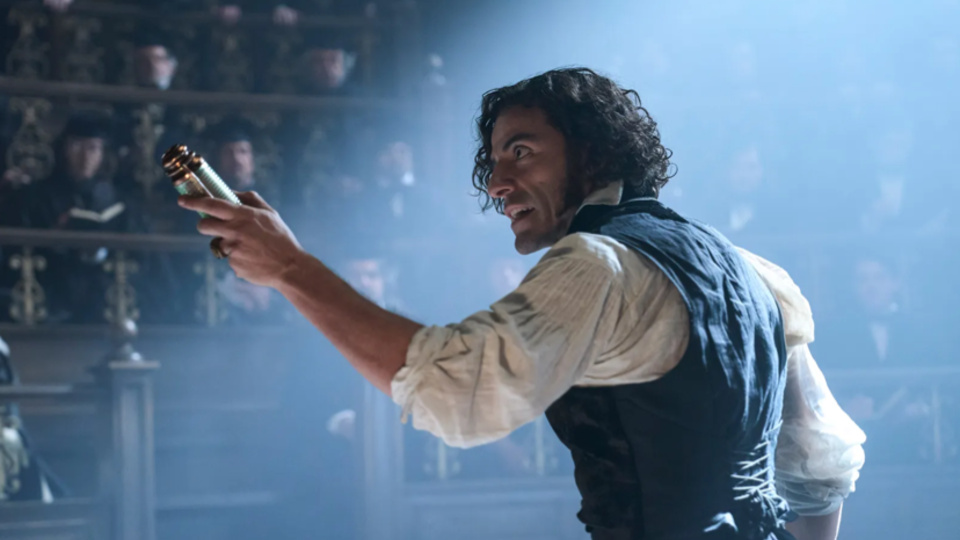
OF THE In any case, the film had not been bad at all in the cinema and it was still not bad now on television. Maybe it was even better: because for Rodríguez there was no prior expectation or subsequent disappointment. And again: the film is not bad at all (although at times a conspiratorial Rodríguez suspects and feels that, here and there, the Big N algorithm imposed some limit and coordinate so that everything works as much as possible for all audiences, for all tastes and ages and ethnicities). And here comes now the one who has already come so many times: with the face of Karloff, Lugosi, Strange, Lee, Conway, Boyle, De Niro, in Universal classics or in titles like Jesse James Meets Frankenstein’s Daughter o Frankenstein’s erotic rites o the high marina Warhol paternal Flesh for Frankenstein or in glam variation Rocky Horror Picture Show the variable-cromada Robocop or as selfless and somewhat foolish paterfamilias Herman Munster. Here he roars now, interpreted with an almost Byronic and almost Elvis Greystoke look by Jacon “Saltburn” Elordi (accompanied by an almost exorbitant and truly monstrous Oscar Isaac, the very fashionable Mia Goth and that Cristoph Waltz who, more than probably the most accomplished and consumed interpreter of Cristoph Waltz since Quentin Tarantino electrified him for Inglorious Basterds). And at the beginning of next year it will return in the The Bride! directed by Maggie Gyllenhaal and starring Christian “American Psycho” Bale. And it won’t be the last, of course. (And before that, the other archetype-paradigm-yang-other side of the coin of the genre will arrive again: a romantic Dracula by the French Luc Besson – where Waltz also appears now as Van Helsing – and which, from what can be seen in its trailers, seems like a diet/white label version of that other one by Coppola in 1992 after saying goodbye to that other vampire-vampirized name Michael Corleone.) Y “Only connect”, EM Forster recommended-dictated for the art of the novel; which in the case of everything Frankenstian can well be translated as sew and sing until reaching, electrifying, that between historical and hysterical “It’s alive!”.
THREE AND THE Frankenstein Del Toro’s is very lively. As vivid and lived as only the loving product of someone who saw James Whale’s 1931 film at the age of eight, in Guadalajara, Mexico, and said and decided that exactly that It was what he wanted to do when he grew up: be a mad scientist barely hidden under the job of film director (for whom his other dream waiting to awaken is In the mountains of madness de H. P. Lovecraft). Thus, Del Toro gradually approached the subject: in the creatures and freaks and vampires persecuted by Blade, Pan’s Labyrinth Hellboy, Pacific Rim, The shape of water, Nightmare Alley, Pinocchio and in the gothic airs of Crimson Peak. But the goal was more than clear and Del Toro has achieved it and, for Rodríguez, the result oscillates between the sublime (sublimation) and disenchantment (that disillusionment that, inevitably, brings what has long been desired). Rodríguez finally appreciates the refined eloquence of The Creature (which Del Toro clearly appreciates more than his Creator) but missed more mention and dedication to the books read (where he stands out Paradise Lost) and that, in the novel, if he remembers correctly, he carries in his portable biblio-backpack. And he had a bit of that invulnerability to arctic cold and lead bullets, closer to a Marvel/DC mutation than to nineteenth-century ingenuity and the almost Tim Burton airs of that long Oedipal-infant-adolescent preface of Victor. Even so, Elizabeth’s somewhat Borrascotian and entomologist-Nabokovian character (here not her own fiancée but her brother’s, and to whom Victor more or less accidentally…) did not make any noise; nor the one that Captain Anderson of the stranded ship Horizon finally understand that Monster is not the same as Creature; nor the subplot of the tycoon-arms dealer and financier of the experiment Henrich Harlander with a lot of contemporary and dystopian tech-tycoon obsessed with life, if not eternal, at least much longer. And it is known: if the dream of reason produces monsters, then the nightmares of science tend to create even more monstrous monsters.
FOUR And — since the beginning of time — little thing fascinates humans more than the inhuman and the drive/compulsion to humanize it. For understanding it. For feeling it like, yeah, one of us… Hence, every vampire or humanoid or lycanthrope or mummy or alien or great villain does not take long to generate its kind, lovable and even, teen: because the monstrous may well come to be understood as a kind of temporary and surmountable and curable acne. We have a need for friendly monsters to distract us from our normal antipathy. Monster derives from Latin monster which is equivalent to prophecy. Hence, this fantasy that the monstrous is yet to come to distance us from the idea that the monstrous is already in us since the beginning of time. The revolutionary modernity of Shelley’s novel proposed the novelty of a man-monster creating a monster-man blurring borders and limits between one and the other. So, now, Rodríguez seeing this brand new Frankenstein, Del Toro is said to miss a great opportunity in that scene in which the dying experimenter begs the experimenter to pronounce his first name, Victor, and then accept him as his son. There, Rodríguez thinks, Frankenstein missed the opportunity to whisper something like “Now you’re a Frankenstein too.” And so, between funny and seriously, explain the automatic and reflex misunderstanding that a good part of the increasingly monstrous humanity calls/calls Frankenstein to the one who was given life after death, but was deprived of the consolation of being able to be called by his name and not by his condition.
On this side of fiction – in the increasingly unreality of reality – there are more and more monsters.
And everyone – everyone is one of us – is known by their first and last name.

André Itamara Vila Neto é um blogueiro apaixonado por guias de viagem e criador do Road Trips for the Rockstars . Apaixonado por explorar tesouros escondidos e rotas cênicas ao redor do mundo, André compartilha guias de viagem detalhados, dicas e experiências reais para inspirar outros aventureiros a pegar a estrada com confiança. Seja planejando a viagem perfeita ou descobrindo tesouros locais, a missão de André é tornar cada jornada inesquecível.
📧 E-mail: andreitamaravilaneto@gmail.com 🌍 Site: roadtripsfortherockstars.com 📱 Contato WhatsApp: +55 44 99822-5750