
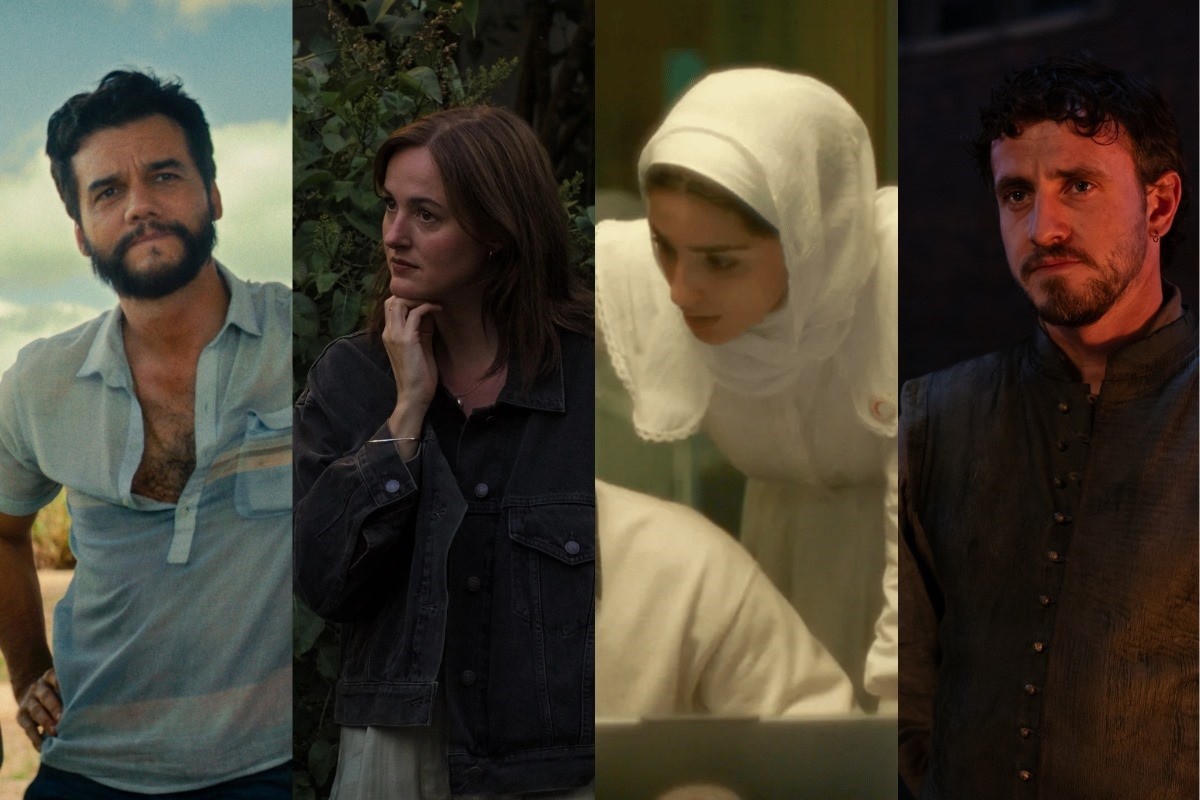
‘The secret agent’. Is there anyone who isn’t looking forward to seeing the new film by Kleber, Wagner, Tânia Maria, from Brazil at the Oscars?
‘Keep your heart in the palm of your hand and walk’. On April 16, at the age of 25, photojournalist Fatma Hassona was killed in Gaza alongside nine members of her family following an Israeli airstrike. The day before, Sepideh Farsi’s documentary, made from recordings and video calls with Hassona, had been selected for the Cannes Festival. The film is the testament of a young woman who tried to use audiovisual media to denounce what has been happening in Gaza.
‘Breaking through rocks’. The story of the first councilor elected in a village in Iran, showing a woman’s challenges in facing a society that uses religion to propagate and justify its prejudices.
‘Our land’. The first documentary by Argentinean Lucrecia Martel, the film recalls the murder of an indigenous leader in 2009 and the struggle that followed for justice. All this in Argentina, but it could be here in Brazil.
‘Orwell: 2+2=5’. In a time of fragile democracies, excessive surveillance and political extremism, the documentary seeks to understand the inspirations of the author of the great dystopian novel of Humanity, one that would seem to be just fiction, but that today sounds real: “1984”.
‘The Voice of Hind Rajab’. The commotion film of this year’s Venice Film Festival, winner of the Grand Jury Prize. Kaouther Ben Hania’s film chronologically reconstructs a massacre in Gaza using real audio of telephone conversations between the victim and agents from a Palestinian aid unit.
‘Thank you’. Director Paolo Sorrentino’s fetish actor, Toni Servillo won the Volpi Cup for best actor at the Venice Film Festival with this intimate portrait of a fictional Italian president. Servillo proves, once again, to be the greatest Italian actor today.
‘The wave’. Musical by Sebastían Lelio inspired by the university feminist movement that shook Chile in 2018, based on the personal drama of a young student haunted by the possible case of abuse committed by the assistant of one of her teachers. From the same director of “A Fantastic Woman” (2017).
‘Sentimental value’. The difficult emotional reunion between two sisters (one of them, an actress) and their estranged father, a once renowned filmmaker who is preparing his return to films with an ambitious project involving an American actress. Grand Jury Prize at the Cannes Film Festival. Joachim Trier’s film is Norway’s representative in the Oscar race.
‘Two attorneys’. In the Soviet Union of the 1930s, during the Stalinist purges, a letter from a prisoner falsely accused by the regime reaches the hands of a young idealistic prosecutor, who seeks to bring justice. Ukrainian master Sergei Loznitsa’s vision of the inner workings of a totalitarian government, shown in Cannes.
‘Apocalypse now’. A great chance to rewatch Francis Ford Coppola’s disturbing 1979 film, which delves into the madness of the Vietnam War. The troubled filming was highlighted in the documentary “The apocalypse of a filmmaker” (1991), another attraction of the festival.
‘Kokuho — The Kabuki Master’. Lee Sang-Il presents the journey of a young man who goes to great lengths to rise in Kabuki, a manifestation of Japanese theater that emerged in the 17th century. The film allows the viewer to come into contact with this stylized and detailed artistic form.
‘The stranger’. A director with a striking signature who moves through varied genres, François Ozon focuses on the book of the same name by Albert Camus, set in colonial Algeria. In addition to the interest aroused by the story, the film has been receiving praise for its aesthetic design.
‘Ozu’s diaries’. Daniel Raim allows the public to learn more about the career of Japanese filmmaker Yasujiro Ozu, celebrated for films such as “Father and Daughter” (1949), “Once Upon a Time in Tokyo” (1953) and “Routine Has Its Charm” (1962).
‘Sentimental value’. Joachim Trier addresses the attempt to restore family ties through art in a film that dialogues with theatrical references, with the cinema of Ingmar Bergman and with a production by Woody Allen (“The Other”, 1988).
‘Smell of diesel’. The militarization of public security in Rio’s favelas at the time of mega sporting events is documented under the eyes of director Natasha Neri (alongside Gizele Martins), who filmed the beating documentary “Auto de resistance”.
‘Chronology of water’. It’s always interesting to follow the steps of Kristen Stewart, who went from an objectified teen in the “Twilight” saga to a self-assured arthouse movie star. Now, he makes his directorial debut in a story about a swimmer ravaged by trauma, played by Imogen Poots, in a praised performance.
‘The wave’. Chilean filmmaker Sebastián Lelio has beautiful credentials — “Gloria” (2013), “A Fantastic Woman” (2017) — that justify a peek at this eye-catching musical about the feminist struggle at a university.
‘Queens of the dead’. Can you resist a zombie thriller with absurd gays and drag queens set in a nightclub and directed by Tina Romero, daughter of George A. Romero, one of the fathers of the genre with “Night of the Living Dead” (1968)? No, it doesn’t.
‘The mastermind’. Kelly Reichardt, from “First Cow” (2019), has had a career full of delicacy and intimate portraits. This period film set in the 1970s, shown in competition at the Cannes Film Festival, stars the charismatic Josh O’Connor as an unlikely frame thief.
‘The Voice of Hind Rajab’. The film that recreates the rescue attempt of a Palestinian girl in a car machine-gunned by Israeli soldiers in Gaza provoked an emotional catharsis in every session at which it was shown in Venice. It was the best film, but unfairly it didn’t win the Golden Lion.
‘Agon — the body and the struggle’. Giulio Bertelli’s film, which won the International Critics Award (Fipresci) for best film by a first-time director in Venice, impresses with its original and bold approach that provides a philosophical and current look at a topic we have seen many times before, overcoming limits in sport.
‘Sentimental value’. Winner of the Grand Jury Prize at Cannes, the new film by Joachim Trier, director of “The Worst Person in the World”, is a delicate drama about family relationships: a veteran filmmaker plans to revive his career with a film starring the daughter he has barely spoken to for years.
‘Two attorneys’. Ukrainian director Sergei Loznitsa combines some of the suffocating austerity of his first features with touches of humor to portray the height of the so-called “Great Terror” era of the Stalinist regime in the Soviet Union.
‘Die, love’. This year’s Cannes Film Festival brought many stories centered on female dramas, and one of the best was this one by Lynne Ramsay, in which postpartum depression received thought-provoking treatment.
‘The ugly stepsister’. Although the wave of adapting fairy tales into the horror genre has become tiring, “The Ugly Stepsister” stands out for its dramaturgical choices and especially for the excellent direction by Norwegian Emilie Blichfeldt, who makes her debut in feature films. Recommended for those with a strong stomach.
‘Honey, no!’. Ethan Coen, in this new project without his brother Joel, continues to invest in the successful combination of noir and acid comedy. Despite not reaching the level of the projects Ethan did with his brother, “Honey, no!” will please fans thanks to its eccentric way of driving the plot.
‘Advice from a retired serial killer’. This corrosive comedy by Tolga Karaçelik highlights a bizarre situation involving a writer and a serial killer. With sharp dialogues, the film makes fun of comparing marriage to murder.
‘The primate’. Director Johannes Roberts is an old horror acquaintance with his low-budget features that deliver what fans of the genre love: suspense, tension, scares. His new film embraces the survival film subgenre as efficiently as ever.
‘Hitler’s fitting rooms’. Italian director Silvio Soldini manages to bring something new to a plot set in Nazi Germany during the Second World War, proving that, despite countless productions on the subject, there are still stories that must be told about this tragic period in history.
‘Yes’. Nadav Lapid, from the excellent “Synonyms” and “The Kindergarten Teacher”, makes his first feature film in four years and uses comedy and absurdism to question the behavior of Israelis in the face of the Palestinian genocide.
‘The mastermind’. Josh O’Connor is the protagonist of a story about painting theft. Director Kelly Reichardt has already made the brilliant “The Shortcut” and “First Cow,” working intimately with the archetypes of genre cinema, and the same is expected with this one.
‘What nature tells you’. The prolific Korean Hong Sang-soo is always unmissable, and this time he returns to one of the themes dear to the first part of his career, male insecurity taking on unexpected dimensions and generating unintentional comedy.
‘The fence’. French filmmaker Claire Denis returns to film in Africa (now Senegal) after the brilliant “Good Job” (Djibouti) and “My Land, Africa” (Cameroon), two of her best films. And he still carries Matt Dillon in tow.
‘The Piano Accident’. Inventor of his own way of creating surreal and provocative comedy, Quentin Dupieux now comes with the story of a social media influencer in an existential crisis, and to embody it he counts on the talent of Adèle Exarchopoulos (from “Blue is the Warmest Color”).
‘Playing with fire’. Film by Delphine Coulin and Muriel Coulin. In the vein of the miniseries “Adolescence”, a single father (great performance by Vincent Lindon) discovers that one of his children is no longer the calm and kind boy he once raised.
‘Ghost elephants’. Werner Herzog, the German filmmaker behind “Fitzcarraldo” and “Bear Man”, this time goes to the Democratic Republic of the Congo in search of explanations for the extermination of animals by human beings — always them.
‘Keep your heart in the palm of your hand and walk’. Without setting foot in Gaza, and based only on video calls with Palestinian photographer Fatma Hassona, Iranian director Sepideh Farsi paints the anatomy of a genocide.
‘Deaf’. Uncomfortable and heartbreaking journey into the world of hearing impairment, with a deaf ceramicist who faces the challenge of having a daughter in a society unprepared to deal with differences. Directed by Eva Libertad.
‘A Portuguese farm’. Discreet like its protagonist, the drama about a teacher inexplicably abandoned by his wife turns into a captivating journey (between Spain and Portugal) about identity. A film by Avelina Prat.
‘Cracked Voices’. What is the price to pay for teenage stardom? What abuse and manipulation are involved in creating “spontaneous” successes? Praised panel on the theme directed by Ondrej Provaznik based on “Bambini di Praga”, a female-based Czech children’s choir that performed from 1973 to 2011.
‘Renoir’. When the family environment suffers, the escape into imagination becomes a safe haven for teenager Fuki Okita (actress Yui Suzuki, praised at the 2025 Cannes Film Festival in a film written by Japanese director Chie Hayakawa for the poetic tone in its approach to the theme).
‘Sentimental value’. After the highly praised ‘The worst person in the world’, Norwegian Joachim Trier won the 2025 Cannes Grand Prix with a “basic” plot: the relationship between an artist father and two daughters is shaken by the arrival of an American actress. The director’s talent makes all the difference.
‘Without pity or mercy’. Old question: after all, do women make tougher films than men? In what sense? In search of an answer, German director Isa Willinger listened to several filmmakers: Catherine Breillat, Céline Sciamma, Ana Lily Amirpour, among others.
‘Apocalypse now’. Francis Ford Coppola’s 1979 masterpiece deserves to be revisited on the big screen and rethought: has the apocalypse already passed or is it just changing its address with new technologies? Marlon Brando can help with the answer.

André Itamara Vila Neto é um blogueiro apaixonado por guias de viagem e criador do Road Trips for the Rockstars . Apaixonado por explorar tesouros escondidos e rotas cênicas ao redor do mundo, André compartilha guias de viagem detalhados, dicas e experiências reais para inspirar outros aventureiros a pegar a estrada com confiança. Seja planejando a viagem perfeita ou descobrindo tesouros locais, a missão de André é tornar cada jornada inesquecível.
📧 E-mail: andreitamaravilaneto@gmail.com 🌍 Site: roadtripsfortherockstars.com 📱 Contato WhatsApp: +55 44 99822-5750