
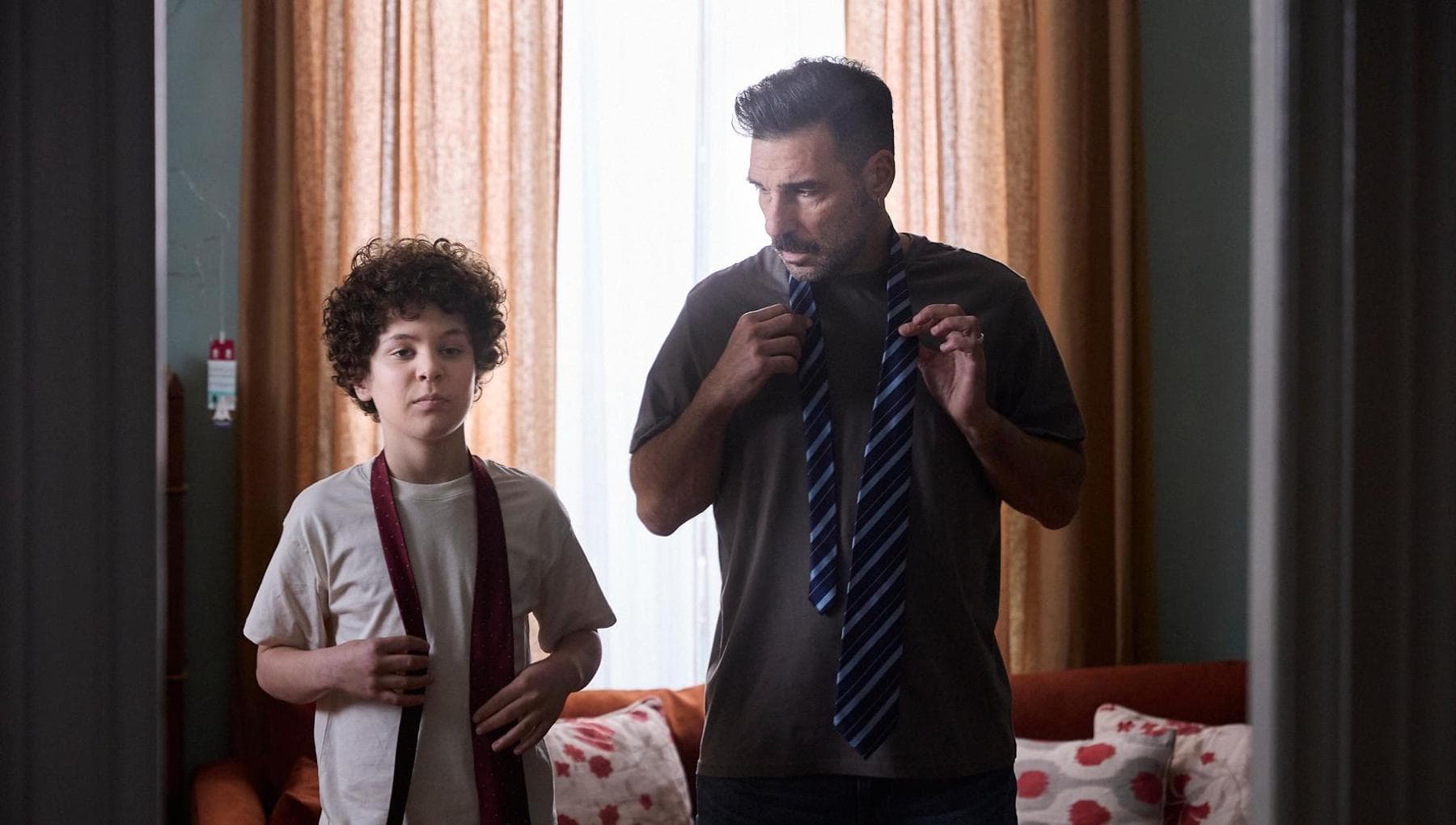
Presented as a special screening, collaboration between Alice nella città and the Rome Film Festival, Per te di Alessandro Aronadio was born from a true story: that of Mattia Piccolithe eleven-year-old boy appointed Standard Bearer of the Republic in 2021 by the president Sergio Mattarella for the dedication with which he cared for his sick father. Played by Leo Edit next to Teresa Saponangelo and to the young man Javier Francesco Leoni. Taken from the book A small time Of Serenella Antoniazziwhich inspired Aronadiotells the story of Paolo, a man in his early forties who slowly begins to lose his memory, and of his son, who with tenderness and irony accompanies him on this descent into oblivion. Together with his wife Michela, they build a small domestic universe made of simple gestures, sudden laughter and silences full of meaning: a fragile but full of love everyday life, where illness becomes a way to rediscover presence. The film, in theaters from October 17, is produced by Piper Film, which distributes, Lungta Film and Alea Fiilm.
Edoardo Leo is back from a particularly challenging night set: what is it about?
“While I’m promoting this film, which I care a lot about, I’m shooting an action film. It’s not really my usual territory, so I’ve come from a night of fights, fake punches and chases: this explains my slightly tired look.”

For you it is a particularly important film for her.
“Yes, to the point that I decided to produce it. It seemed like an incredible story, firstly because it comes from a true event, and secondly because there was this difficult but fascinating challenge: trying to make a comedy about a tragedy, about one of the worst diseases that can happen to a woman or a man, that is, Alzheimer’s. I embarked with Alessandro Aronadiowith whom I had already worked a couple of times and whose light writing I know even on important topics—and we did it together For you”.
I remember that when he came to present the project in Riccione, at the Professional Days, he told the exhibitors how difficult but also necessary it was to propose this story.
“Yes, it went exactly as I said in Riccione. My two producers, Maurizio Piazza and Andrea Calbuccithey called me and said, ‘We got the rights to a book.’ When this happens, you think: ‘They must have got a bestseller that sold 400 thousand copies’. Instead my first question was: ‘But how much did it sell?’. They replied: ‘Nothing’. And already the enthusiasm had died down a bit. Then they added: ‘But it’s a great idea for a comedy.’ ‘What’s it about?’ I asked. ‘Early Alzheimer’s’. I remained silent: ‘You want to make a comedy about early Alzheimer’s from a book that hasn’t sold anything?’. They told me: ‘Read it and then we’ll talk about it’. I came home, I read it — it was the wife’s diary Paolo Piccolithis man suffering from early Alzheimer’s — and he overwhelmed me. The problem was convincing a director and a distributor. When I talked about it with Alessandro Nardi and then with Medusa and for films, the scene was repeated: ‘How much did it sell?’. ‘Nothing’. ‘And what is he talking about?’. ‘Early Alzheimer’s’. Silence. Then they read it, they saw the true story, the video of President Mattarella rewarding that child, and they understood. I just have to thank them.”
Did the family see him?
“He saw some scenes, not everything. By our choice we did not have a private screening: we prefer that they see it today together with the public of the Rome Film Festival, because this film – as we declare in the title – is a dedication to that man, who is still alive, is in an RSA and is not very well. We want this dedication to come from the public together with us”.

What journey has it been for you, going through this story and this character?
“It’s a tragedy, yet the actor lives on in his memory. I had this illness in my family: my grandmother got ill very young, just after she turned fifty. I was a teenager, I remember perfectly what happened in our house. Since I made the film, a particular thing happened: I started asking my father questions. He’s a person with a strong sense of modesty, even in his feelings, so we had never talked about it. I asked him many things, and memories came out that I didn’t know, or that I had repressed. The film allowed me to take a journey into my roots, into my family. It was one of those cases where a film enters your personal life, not just your professional one.”
Edoardo Leo, “‘For you’ is a wonderful message about caring for and loving a child”

It is an important film for many families and for society.
“Yes, and the thing that really surprised me was the amount of people who wrote to me since we started communicating. Many have or have had someone in their family affected by Alzheimer’s at an advanced age. I have been flooded with messages from people thanking us for talking about this disease, which in reality affects an entire family. I have experienced it personally: how many people are left alone, without adequate structures, which are expensive. Many associations are writing to me saying that they will use the film to put pressure on the institutions, to get more support. It’s a total plague. In this sea of desperation we tried to do what cinema must do: raise reality, tell it, and – absurdly – try to make people smile. It’s not a simple challenge.”
It’s a movie about a little boy who looks after an adult. In that pain you find the joy of living and even laughing. How important was this part?
“Fundamental. It’s the heart of the film. When you are diagnosed with an illness like that, knowing that you have little time, you try to leave your son with as many memories as possible: teaching him a family recipe, teaching him to drive – even if he’s eleven – because you know you won’t be able to be there when he’s eighteen. And while all this is happening, an inversion occurs: an almost fifty-year-old father slowly becomes a child, and a child is forced to become a father of his own father. It’s terrible, because a child should be able to just be a child, but it’s also something poetic. In real life, this kid did it without ever complaining. It’s a wonderful message about nurturing and love. I myself never heard my father complain when he went twice a week, together with his brothers, to look after my grandmother. It was a form of love, pure and silent.”
What struck you about the real protagonist, Mattia, later awarded by Mattarella?
“I met him at the end of the film. He’s seventeen now, he’s a big boy, but he still has the look he had when he was eleven: shy, sweet, pure. I explained to him that I wouldn’t imitate his father, but that I would try to be grateful towards a person who today can’t understand this. That’s why I didn’t go to see him. In the end, in the first meeting, both Michela and Mattia told me: ‘You have the same smile as dad’. It’s one of the strongest things that sticks with me from this whole experience.”
The moment from the set that will remain with you over time?
“One day I was in the car with Javier, the boy who plays my son. We were shooting some scenes in the camera-car, so we had a lot of time to talk. At a certain point he told me that his father isn’t there, I’m not sure why. He told me that he had decided to make the film to understand what it feels like to have a father. Even just repeating it now makes me want to cry. It was a moment of enormous closeness, even in terms of acting, because an eleven-year-old child he acted beyond the lines. I had to keep up with him, with all my being. It was an unforgettable moment.”
What does it mean to present the film at the Rome Film Festival?
“Rome is home. Here, with Alessandro, we had already brought It’s about time and the welcome was wonderful. So from the beginning we decided to come back here and present it in the Grand Public section, which is just the right place for a comedy like this.”
André Itamara Vila Neto é um blogueiro apaixonado por guias de viagem e criador do Road Trips for the Rockstars . Apaixonado por explorar tesouros escondidos e rotas cênicas ao redor do mundo, André compartilha guias de viagem detalhados, dicas e experiências reais para inspirar outros aventureiros a pegar a estrada com confiança. Seja planejando a viagem perfeita ou descobrindo tesouros locais, a missão de André é tornar cada jornada inesquecível.
📧 E-mail: andreitamaravilaneto@gmail.com 🌍 Site: roadtripsfortherockstars.com 📱 Contato WhatsApp: +55 44 99822-5750