
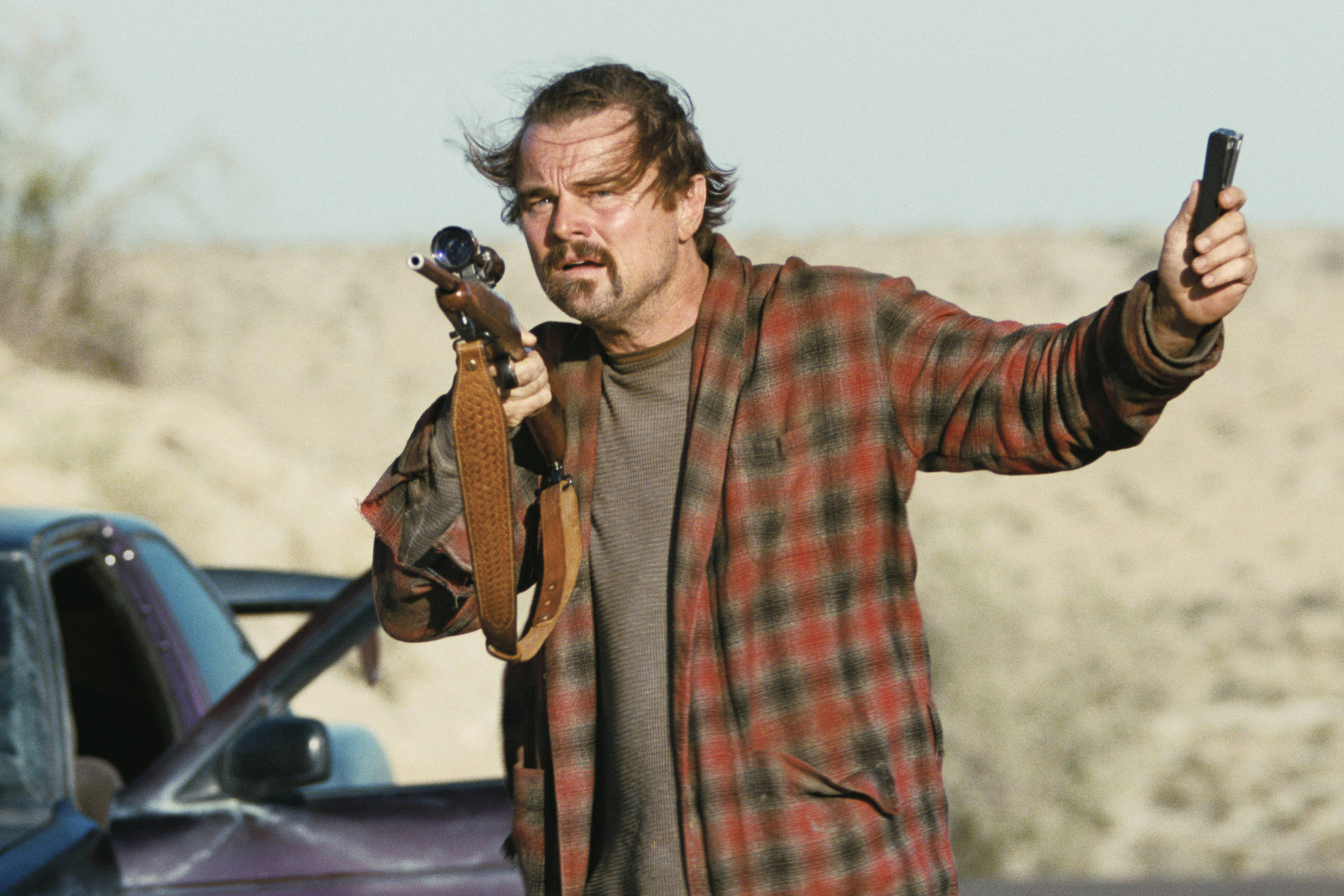
(SUMMARY) One of the great filmmakers working today, Paul Thomas Anderson fails in his new film, “One Battle After Another”, by not capturing the wit of the Thomas Pynchon book he adapted. While the famous writer views the individual’s struggles with power with skepticism and haunting ambiguity, the director, abusing sentimentality and obsessed with Trump, does not realize the macabre implications of the “lust for fascism”.
The reaction of critics and the public to Paul Thomas Anderson’s new film, “One Battle After Another” (2025), is completely opposite to the reception to the book that gave rise to it, the novel “Vineland”, by Thomas Pynchon, published in 1990.
At the time, Pynchon, a writer known for being a recluse, hadn’t released anything new for 17 years. The previous novel, “The Rainbow of Gravity” (1973), a gigantic postmodernist riddle (more than 700 pages in the national edition of Companhia das Letras), was so controversial that the Pulitzer refused to award it because of alleged pornography. By winning the National Book Award, Pynchon sent a metaphorical middle finger to the literary world, sending comedian Irwin Corey to accept the honor.
When “Vineland” arrived in bookstores, expectations were enormous. Would it be something similar to the book that made you famous? No, it wasn’t like that at all.
The new plot was about a group of hippies and revolutionaries who wasted their time smoking drugs and contemplating the remorse of having been whistleblowers in the past, abandoned between the governments of Richard Nixon and Ronald Reagan.
Obviously, this was only what Pynchon’s critics and contemporaries noticed. Salman Rushdie even gave a glowing review, but confessed that he “expected more”. David Foster Wallace wondered in a letter to Jonathan Franzen whether the one-time innovator had “gone gaga.” Anyway: today, “Vineland” is considered one of Pynchon’s weakest novels, which is an injustice.
Thirty-five years later, Paul Thomas Anderson takes advantage of the book’s plot and creates his new feature film. The outcry is instantaneous. It is a masterpiece, many say. It is one of the films of the decade, say others.
What changed between the book and the film adaptation, whose subject matter is exactly the same? In one word: Trump. Donald Trump.
Like a specter, the President of the United States hovers over each frame created by PTA (as the most ardent fans call the director). Since 2016, it is no exaggeration to say that contemporary culture’s obsession with Trump has led us to an unprecedented spiritual paralysis. And “One Battle After Another” also suffers from this malady.
Which is a shame, especially in relation to Anderson, owner of one of the most impeccable filmographies in American cinema. In “Jogada de Risco” (1996), “Magnolia“ (1999), “Black Blood” (2007), “The Master” (2012) and “Licorice Pizza” (2021), he demonstrated an inventiveness and artistic rigor that owes nothing to, for example, a Stanley Kubrick or a Martin Scorsese.
As if that weren’t enough, the director has a unique rapport with Thomas Pynchon. He managed to adapt “Inherent Vice”, an impenetrable 2009 novel, into a 2014 film of the same name, a noir parody that is also a beautiful homage to “The Long Goodbye” (1973), the hipster version directed by Robert Altman of Raymond Chandler’s classic.
Furthermore, “The Master,” an ironic fable about the dangers of cults and charismatic leaders, is clearly inspired by the first part of “V,” Pynchon’s 1963 debut novel.
Therefore, as with “Vineland” in 1990, public anxiety was immense around the new chapter that PTA had prepared for its “Pynchonean Cinematic Universe”.
What went wrong? Yes, who knows why, he got it right: Trump. Donald Trump.
Ironically, the plot of both is the same, just the names are different. Bob Ferguson (in the film; in the novel, Zoyd Wheeler) is a former revolutionary hippie who takes care of his daughter Willa (in “Vineland”, Praire) alone because his wife Perfidia (for Pynchon, Frenzy) is on the run after betraying her fellow fighters to her lover, the military man Steve Lockjaw (in the book, prosecutor Brock Vond).
The name change has a purpose: PTA was inspired by “Vineland” to also change its political meaning. Nixon and Reagan leave, Bush and Trump enter, even if they are not mentioned directly, in addition to groups like Antifa, the issue of immigrants, authoritarianism, racism, the crisis of democracy — and everything that is today bar talk among our intellectuals.
Both the director and the novelist, however, have greater ambitions. Above and beyond their elective affinities, both meditate on three themes essential to modernity, particularly after the Second World War: paranoia as a substitute for our existential emptiness; the underground combat between the forces of chaos and control in America; and, this is essential to understand “Vineland” and “One Battle after Another”, what we can shamelessly call “the passion for fascism”.
“The lust for fascism” is not an exact political concept, but a diffuse kink that connects sex and power. It is not something that refers to a specific ruler, like Trump or Benito Mussolini.
In fact, for Pynchon and Anderson, it is something intrinsic to the nature of the State itself, which is reflected in our fascination with power — and how it corrodes human relationships, particularly between members of a family.
In this aspect, the State is the supreme entity that enslaves individual conscience and turns revolutionaries and reactionaries into a formless, indifferent mass, in which one side begins to devour the other, like Saturn tearing off the limbs of its children, an event dramatized in the famous painting by Francisco Goya.
This is where Paul Thomas Anderson’s error occurs. He prefers to see this tragedy through the filter of American sentimentalism, common to his first films (such as “Boogie Nights”, from 1997, and “Magnólia”), something he abandoned in his more mature works (“Black Blood” and “Phantom Thread”, from 2017).
Thomas Pynchon, on the other hand, avoids any kind of “emotion” (which does not mean that it stops being “exciting” in his books) with a healthy skepticism regarding the true intentions of the characters in “Vineland”, particularly those involving Frenzy/Perfidy.
For PTA, Perfidia is a whistleblower, but continues with the dream of “revolution”, even if it is “in the shadows”. In Pynchon’s view, Frenzy betrays his colleagues out of revolt because, deep down, he always had an irreparable passion for Brock Vond.
This also occurs between Perfidia and Steve Lockjaw (played superbly by Teyana Taylor and Sean Penn) in “One Battle After Another”. In fact, it is the engine of all the drama involving Bob Ferguson (a Leonardo DiCaprio who perfects the “charming stoner” type) and his daughter Willa (a promising Chase Infiniti, a real name that seems straight out of Pynchon’s pages).
However, if in the book the passion for fascism is the enigma that confuses the characters and the reader, in the film it becomes just a script mechanism so that the audience keeps thinking about the only man who haunts every action recorded in VistaVision.
And you know who he is, right? Yes, him: Trump. Donald Trump.
It’s sad that this happens, because “One Battle After Another” isn’t bad. PTA is a master director, possessing an impeccable technique. He manages to subvert the conventions of the thriller and action film with rare inventiveness. However, in political terms, he is naive.
And what would be the reason? Unlike Thomas Pynchon, he does not understand the macabre implications of the “lust for fascism.” Like any colleague in the film profession, he believes that, today, even if he doesn’t mention it explicitly, all the world’s problems revolve around Donald Trump.
This type of attitude is very reminiscent of an essay that the Englishman JG Ballard wrote in the 1980s, entitled “Why I Want to Fuck Ronald Reagan”. Replace Reagan with the name of the New York tycoon — the rhetorical impact is the same.
Ballard explains, in his own anarchic style, that Reagan attracted a peculiar kind of eroticism, involving sex, finance and unbridled moral destruction, something that has always been part of the American Republic since its founding.
Pynchon would develop a similar reasoning in his following books, including “Against the Day” (2006) and “The Last Scream” (2013) — and everything leads us to believe that his next novel, “Shadow Ticket”, due out in October, will follow the same path.
Now, Trump tries to practice the same type of procedure. The burning question: How did we, supposedly enlightened people, let this happen?
One of the best essayists of recent times, Martin Gurri, states that there is a more obvious reason for such an event — paradoxically, no one wanted to observe it seriously.
According to him, if before the progressive elite simply did not understand and did not want to understand the Trump phenomenon that occurred between 2016-20, what is new now is that they have come to understand it too much.
In other words: the American president became a distorted mirror of everything she most desired and did not dare to articulate to herself, as she was immersed in her moral exhibitionism. And what would this desire be?
This is the fact that Trump represents absolute disbelief in representative democracy.
However, in recent years, the intelligentsia, day after day, has proven that it was never interested in protecting democracy, as it claimed to the public, because it too was immersed in this blind spot.
It turns out that this farce didn’t last long. Donald Trump, Jair Bolsonaro, brexit, Javier Milei, Giorgia Meloni, Geert Wilders, among others, came from underground and showed that this intelligentsia could be challenged, either with the help of social networks, or with the underground network of “microculture” that was articulated on the margins of society and gained space in the centers of power.
Trump’s defeat in 2020 led us to believe that everything was just a “fascist hiccup”. However, this was an illusion, because, with his return, Trump showed himself as the supreme (and contradictory) incarnation of the desires of these enlightened people — and, moreover, of our desire for the State as the only way to solve our moral problems.
Gurri’s thesis is disturbing to our sanctimonious eyes, but it confirms the prophecy of “Vineland” and explains the dramatic and political weakness of Anderson’s film, which transforms young Willa into an heir to ideological activism as a missing link to maintain family ties (unlike her literary counterpart, who feels a strange fascination with Brock Vond).
This is the moral naivety of PTA, who doesn’t realize that this girl’s generation (and other young people) will, in the near future, have difficulty understanding how the Minotaur came out of the labyrinth and devoured us without warning.
But don’t worry, there is hope. In the end, when the closing credits of “One Battle After Another” appear, to the sound of Tom Petty’s delicious “American Girl”, we know that there is only one guy who managed to decipher all of this for us.
Your name? You guys know that, right?
Sim, ele: Pynchon. Thomas Pynchon.
Whoever lives will see.

André Itamara Vila Neto é um blogueiro apaixonado por guias de viagem e criador do Road Trips for the Rockstars . Apaixonado por explorar tesouros escondidos e rotas cênicas ao redor do mundo, André compartilha guias de viagem detalhados, dicas e experiências reais para inspirar outros aventureiros a pegar a estrada com confiança. Seja planejando a viagem perfeita ou descobrindo tesouros locais, a missão de André é tornar cada jornada inesquecível.
📧 E-mail: andreitamaravilaneto@gmail.com 🌍 Site: roadtripsfortherockstars.com 📱 Contato WhatsApp: +55 44 99822-5750