
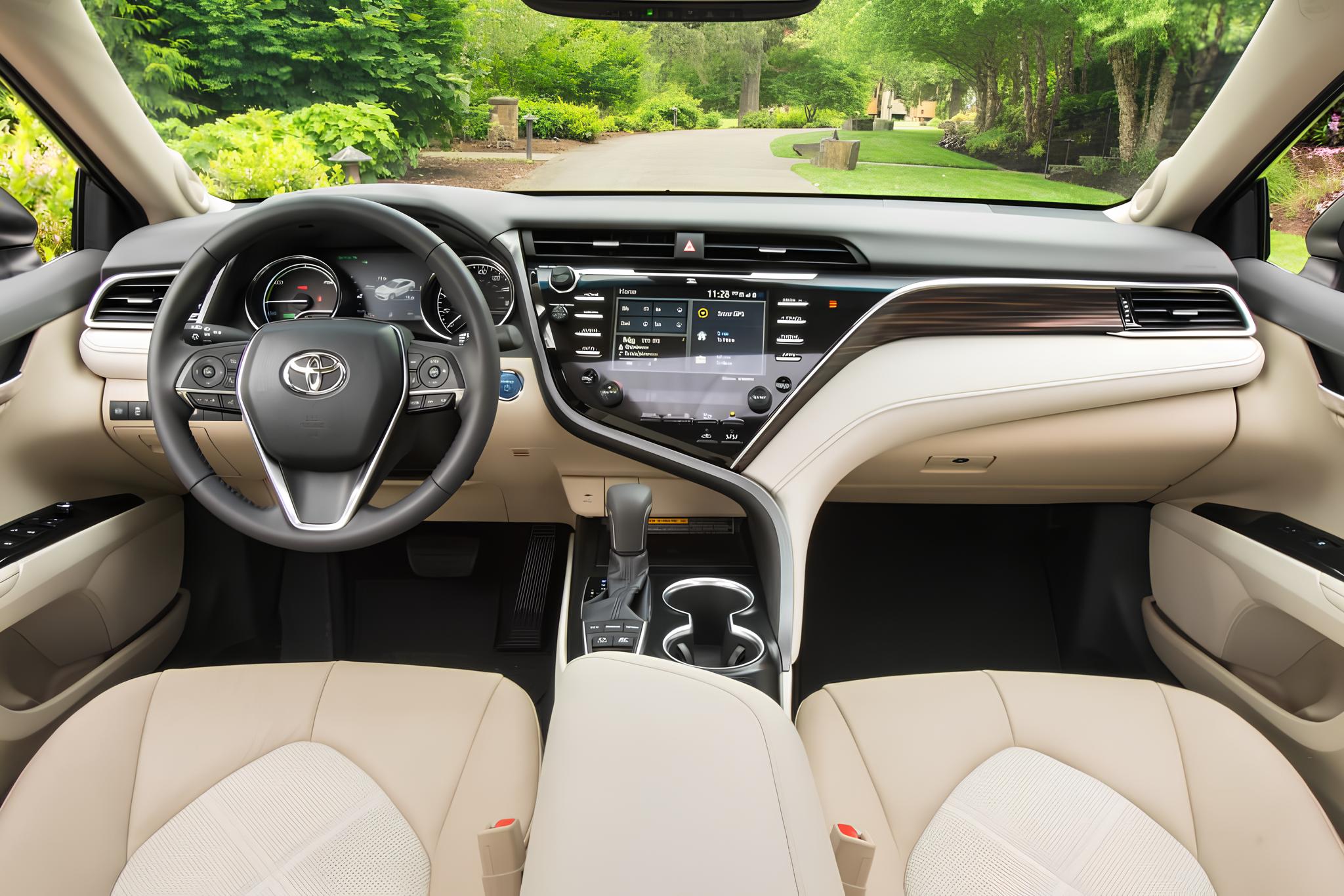
Toyota surprises the automobile market again with the launch of the new Toyota Camry Hybrid 2025, a hybrid sedan that combines energy efficiency, cutting-edge technology and an affordable price. With a consumption of 25.49 km/l, equivalent to 51 miles per gallon (mpg), and a starting price of US$28,700 (around R$160,000 at current prices), the model is an attractive option for those looking for savings and sustainability. However, there is a significant limitation: the vehicle is only available in the United States.
The new generation of Toyota Camry presents a significant change in its strategy: the line becomes exclusively hybrid. This means that all versions of the 2025 Camry have a propulsion system that combines a combustion engine and an electric motor. The mechanical configuration features a 2.5-liter gasoline engine associated with an electric motor, with combined output of 225 hp for front-wheel drive versions and 232 hp for all-wheel drive versions.
This technological advance reflects the Japanese automaker’s commitment to more efficient and sustainable vehicles. Toyota, which already leads the hybrid car market with models like the Prius, reinforces its commitment to green mobility. Being a car that does 25.49 km per liter, this is one of the best consumption in the medium sedan category.
The performance of the new Toyota Camry Hybrid is one of its main attractions. In addition to low consumption, the model provides a smooth drive, with quick and silent responses. This is due to the efficiency of the fifth-generation hybrid system, which optimizes the use of engines to reduce consumption and pollutant emissions.
Toyota also improved the model’s aerodynamics, which helps to improve fuel consumption and stability at high speeds. In tests carried out by the EPA (US Environmental Protection Agency), the LE model achieved 51 mpg (miles per gallon) in the city and 53 mpg on the highway, which when converted corresponds to an average of around 25.49 km/l.
Renovated design and modern equipment
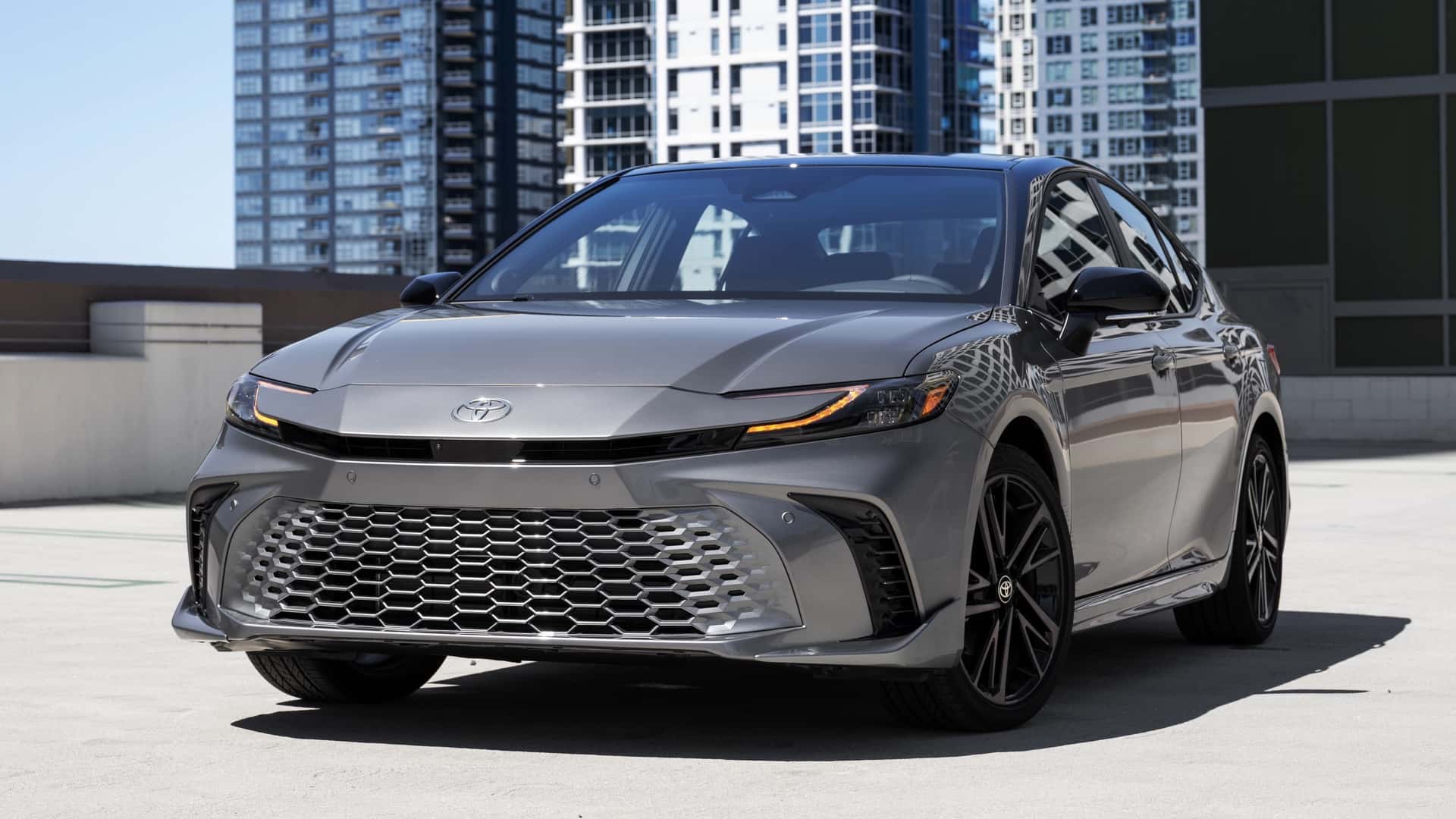
The 2025 Toyota Camry Hybrid has received significant design updates. With sportier lines, redesigned bumpers and a new set of LED lights and headlights, the model conveys modernity and sophistication. Internally, the finish was improved with higher quality materials, and the dashboard gained a new, more intuitive layout.
The entry-level versions have an 8-inch multimedia center, while the more complete versions have a 12.3-inch screen with compatibility with Apple CarPlay and Android Auto.
Additionally, the Camry Hybrid comes equipped with the T packageOyota Safety Sensewhich includes lane keeping assistant, adaptive cruise control, autonomous emergency braking and traffic sign recognition.
Toyota’s new hybrid hits the automotive market for US$28,700
The starting price of US$28,700, which corresponds to approximately R$160,000, positions the Camry Hybrid as a highly competitive option in the North American market. At this price, the model offers excellent value for money, especially considering the fuel saving benefits and onboard technological resources.
However, it is important to highlight that the price of R$160,000 is a value directly converted based on the current dollar exchange rate, without considering taxes and fees that would be applied in markets such as Brazil. This means that, if the model were to be sold on Brazilian soil, its final value could exceed R$200,000.
Exclusive to the USA: Understand why the car is not sold in Brazil?
Despite the success and qualities of the Camry Hybrid, Toyota chose to make it available only in the United States. The decision may be related to factors such as demand for hybrid vehicles, maintenance infrastructure, and the automaker’s commercial strategies.
The North American market has greater acceptance of electrified vehicles, in addition to tax incentives and government subsidies that make these cars more affordable. In countries like Brazil, despite the growth of electromobility, the acceptance of hybrids is still limited, both due to infrastructure and the tax burden.
| Model | Average consumption (km/l) | Starting price (approximate) | Key highlights | Market presence |
|---|---|---|---|---|
| Toyota Camry Hybrid | 18.5 km/l (media) | US$ 28.000 | Balance between performance, economy and reliability | Alta |
| Honda Accord Hybrid | 17.8 km/l | US$ 29.500 | Modern design and great performance | Alta |
| Hyundai Sonata Hybrid | 18.0 km/l | US$ 28.250 | Good technology and comfort, but shorter range | Average |
Toyota’s decision to make the Camry hybrid-only reflects a global trend toward cleaner technologies. The quest to reduce CO2 emissions and the environmental impact of vehicles is a priority for automakers.
According to data from the IEA (International Energy Agency), global sales of hybrid and electric cars are expected to exceed 40% of the market by 2030. Toyota, with its history of pioneering in this segment, continues to lead this transformation with products such as the Camry Hybrid.
For now, Toyota Camry Hybrid 2025 is left out of the Brazilian market
The 2025 Toyota Camry Hybrid, in addition to being a hybrid car that does 25.49 km per liter, is an example of how technology and sustainability can go together in the automotive sector. With consumption of 25.49 km/l, renewed design, advanced safety features and a price of R$160,000, the model represents excellent value for money.
However, its exclusivity to the US market limits access for consumers in other regions, such as Brazil, where a hybrid car that does 25.49 km per liter is still a distant dream for many. Still, Toyota’s initiative points the way to a more efficient, affordable and sustainable future.
As demand for hybrid cars increases globally, there is hope that models like the Toyota Camry Hybrid can be made available in more markets, allowing more people to benefit from this innovation.

André Itamara Vila Neto é um blogueiro apaixonado por guias de viagem e criador do Road Trips for the Rockstars . Apaixonado por explorar tesouros escondidos e rotas cênicas ao redor do mundo, André compartilha guias de viagem detalhados, dicas e experiências reais para inspirar outros aventureiros a pegar a estrada com confiança. Seja planejando a viagem perfeita ou descobrindo tesouros locais, a missão de André é tornar cada jornada inesquecível.
📧 E-mail: andreitamaravilaneto@gmail.com 🌍 Site: roadtripsfortherockstars.com 📱 Contato WhatsApp: +55 44 99822-5750