
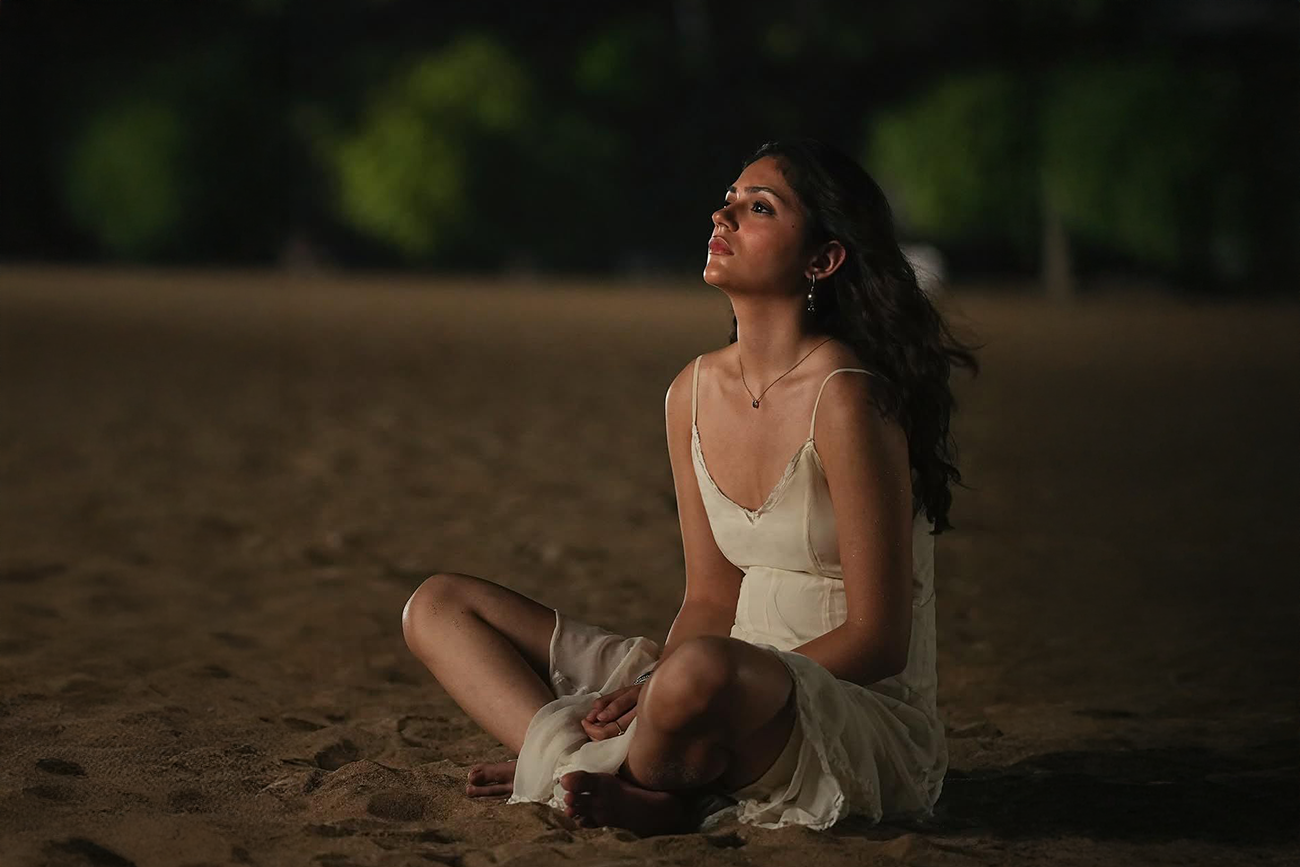
The central conflict opposes love, work and responsibility in the face of a disease that accelerates deadlines and transforms each step into a measurable decision. In “No Amor e na Música”, directed by Mohit Suri, Ahaan Panday and Aneet Padda play Krish Kapoor, a musician who seeks to assert himself, and Vaani Batra, a discreet writer who transforms texts into lyrics; the film declares early on that the relationship between them will be tested by career and care choices when a diagnosis enters the scene and begins to require rigid routines and course adjustments.
Krish starts with a straightforward goal, to prove talent in a competitive market. The route changes when he finds Vaani’s writings and sees material for songs there. By proposing collaboration, he divides the focus between individual ambition and the task of translating her voice into popular music. The partnership creates a clear routine, lyrics before, melody after, that sets the time of the scenes, aligns expectations and gives Vaani space to listen to herself, while giving Krish discipline.
The effect appears in the first responses from the audience, who recognize the signature of her words and associate the duo with easy-to-remember choruses. With the interest of producer Vinit Rawal and the entry of the band Josh on the circuit, the calendar is tight. Friend KV tries to coordinate appointments, and each invitation increases the chance of public error. Krish’s objective is no longer to get a place but to sustain relevance without losing authorship.
When Vaani’s forgetfulness appears, she postpones the conversation and tries to keep the wheels turning. The problem comes from the intimate and reaches the operational: a changed word compromises the lyrics, a time lapse delays the sound check, a name said on impulse reveals something that she still doesn’t want to admit. Hearing her call for someone else, Krish realizes that the obstacle is not just market pressure.
The return of her ex-fiancé, Mahesh Iyer, works as an external agent that exploits her vulnerability and moves private situations into exposure environments. This increases the risk in presentations and changes the couple’s immediate objective, which now includes protection and predictability. His presence does not serve as decoration, but as a trigger for incidents that force quick choices and reduce the margin for retreat.
Vaani’s family, Mr. and Mrs. Batra, enter the conversation with objective care. Guided by medical evaluation, they ask for a regulated routine and suggest a period in a quieter place. This recommendation changes their life style, realigns their schedules and reduces space for long trips and night events, which forces Krish to make decisions that cost window dressing and affect contracts.
The trail acts as information and point of view. Vaani’s lyrics deliver to the viewer what the characters are reluctant to say; When she writes about fear of losing referrals, we understand the stage of the problem and the size of the risk to the partnership. The editing speeds up narrative time in presentations, condensing weeks of work into minutes and making it clear that success comes faster than the ability to manage the disease. Vaani’s notebook, the source of the songs, changes the focus from specific passages to her memory without didactic explanations, reinforcing that writing guides the understanding of each phase.
There are turning points defined by practical decisions. At an important meeting, Krish cancels his presence to accompany Vaani after an episode of confusion, loses capital with producers and buys time for herself. Then, Mahesh’s rapprochement during a public occasion raises the tension to a level where any mistake becomes recorded and repercussions. The environment stops being the studio, controlled, and becomes the stage, uncontrollable, where exposure multiplies the price of the next step.
The consequences are immediate. The run of shows slows down, the team disperses and the press speculates about Krish’s future. He needs to decide whether to turn his pain into music and expose his own life to maintain his work or whether to retreat to preserve what remains of privacy. Vaani, in turn, faces the progressive loss of references and the possibility of a routine that reduces triggers, even if this involves changing cities and reviewing his presence in everyday life.
The film anchors these choices in simple gestures, keeping a notebook, correcting a verse, arranging fixed times, and avoids transforming the diagnosis into a figure of speech. Everything has a countable effect on her autonomy and his trajectory. The useful comparison here is with “A Star Is Born.” There, the fall of one artist drives the rise of another according to market logic. In “No Amor e na Música”, the script links them both to the same health risk and shifts the debate from ego to care.
The songs function less as propaganda and more as a record, a history that points out advances, setbacks and gaps in lucidity between the studio, consultations and event corridors. Without revealing the resolution, it is worth defining what is at stake when the story reaches its peak. On the one hand, the chance for Krish to bet on a song born from Vaani’s diary to support the work and create a public shield. On the other, the possibility of Vaani prioritizing a stable environment, even if this reduces her stage presence and changes the design of the relationship. Both routes charge a high price and produce different effects on career, family and health. The film ends this section leaving decisions pending and keeps open the questions that matter, what each person chooses to keep and what each person accepts to lose when time becomes the most constant adversary.
Film:
In Love and Music
Director:
Mohit Suri
Also:
2025
Gender:
Drama/Musical/Romance
Assessment:
8/10
1
1
Natalia Walendolf
★★★★★★★★★★

André Itamara Vila Neto é um blogueiro apaixonado por guias de viagem e criador do Road Trips for the Rockstars . Apaixonado por explorar tesouros escondidos e rotas cênicas ao redor do mundo, André compartilha guias de viagem detalhados, dicas e experiências reais para inspirar outros aventureiros a pegar a estrada com confiança. Seja planejando a viagem perfeita ou descobrindo tesouros locais, a missão de André é tornar cada jornada inesquecível.
📧 E-mail: andreitamaravilaneto@gmail.com 🌍 Site: roadtripsfortherockstars.com 📱 Contato WhatsApp: +55 44 99822-5750