
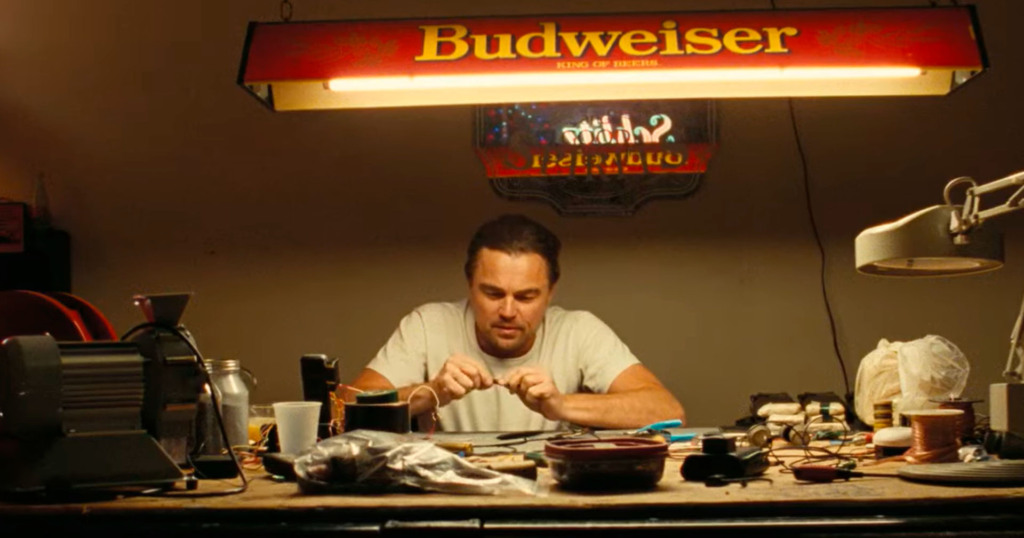
The relationship between literature and cinema has always been somewhat troubled, especially when an adaptation decides to move away from its original source. This distance can often generate criticism, but on other occasions it is precisely what makes the cinematographic work unique.
Paul Thomas Anderson, who has just released One Battle After Another, a film starring Leonardo DiCapro, finds himself in this second case with his newest work which adapts Thomas Pynchon’s book.
The director had already turned Inherent Vice into a film, but the ambition was always to bring Vineland to the screen. The point is that Pynchon is known for dense plots, full of political layers and eccentric characters, elements that PTA brought to his film. However, for him, the work would be outdated for current times and could be better used.
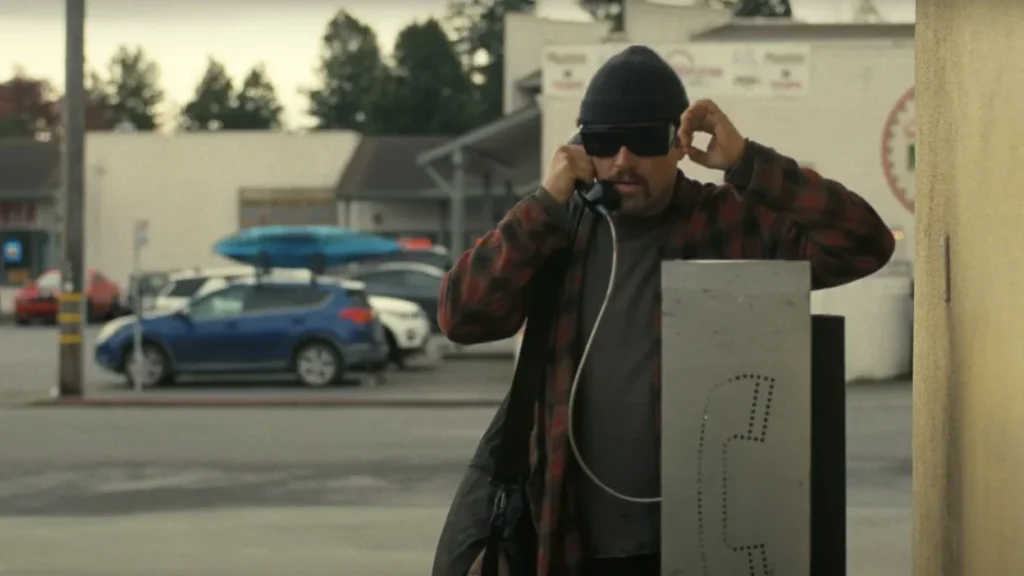
From Vineland to One Battle After Another
When deciding to adapt Vineland, Anderson took a bold path and, instead of faithfully following the plot, he chose to extract only the essence: themes, atmospheres and political conflicts. The result was One Battle After Another, a film that can be seen much more as a reinvention than a literal adaptation.
The director himself has already stated in an interview that he “stole” the parts that interested him most to shape his own narrative. This choice proves to be the right one because it allows the film to dialogue directly with the present. While Vineland is stuck in the 1980s, a period marked by the Reagan administration, One Battle After Another brings its critique to our time, reflecting political and social threats that remain current.
Updating political criticism
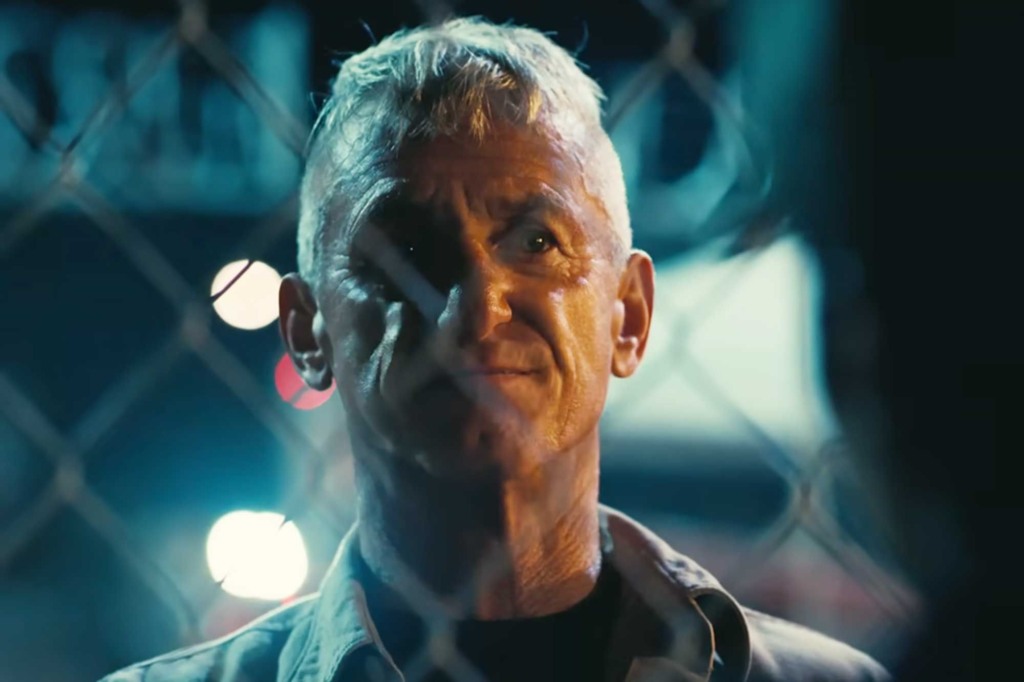
In the book, the authoritative figure is Brock Vond, symbol of the War on Drugs. In the film, this role is assumed by Colonel Lockjaw, played by Sean Penn, whose obsession is no longer linked to drugs, but to immigration. The persecution of foreigners, combined with the support of elites who seek a “pure and safe” country, transforms the villain into a direct reflection of contemporary political tensions.
This shift in focus allows Anderson to explore debates that go beyond the original text, addressing structural racism, the rise of authoritarianism, and the manipulation of power by economic groups. It’s an idea that connects today’s cinema to the criticisms that Pynchon made decades ago, while updating his approaches.
Revolution and resistance
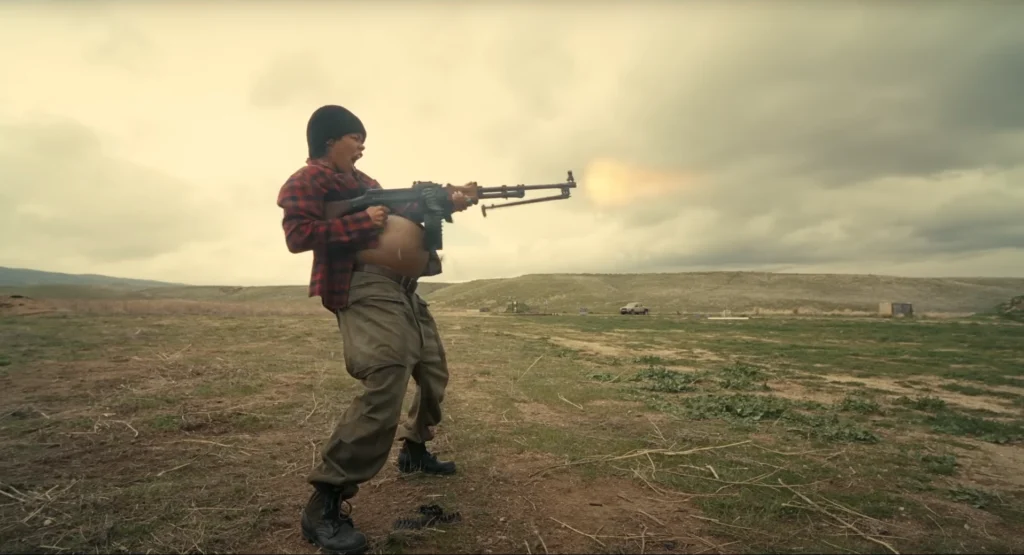
Another breaking point is in the revolutionary groups. In Vineland, resistance is represented by the collective 24fps, linked to cultural activism. In the film, the French 75 organization appears, which carries a global flag, encouraging freedom of choice and the end of borders. The motto “Free borders! Free choices! Free from fear!” (“Free borders! Free choices! Free from fear!”) summarizes the strength of the speech that guides the characters.
This difference shows how Anderson sought to expand the reach of the message, making it more comprehensive and directly related to the global political scene.
The same essence in different stories
Even though the characters, historical contexts and antagonists have changed, the essence remains similar. Both Vineland and One Battle After Another are about fighting systems that try to silence dissenting voices and keep power concentrated in the hands of elites. These are stories that refuse neutrality, placing the viewer before the clear choice of being on the side of oppression or resistance.
Anderson has already said in an interview that, in two decades, he realized that political dilemmas never go out of style, they just change their face. It is precisely this perception that makes the film such a relevant work, because it highlights that social battles are repeated, even in different contexts.
By reinventing Vineland, Anderson managed to balance the strength of Pynchon’s literature with a cinematic look that speaks to the present day. The combination gave rise to a work that not only stands on its own, but also expands the debate initiated by the author.
One Battle After Another is showing in cinemas.
The post One Battle After Another completely changes the book that inspired the film appeared first in Observatório do Cinema.

André Itamara Vila Neto é um blogueiro apaixonado por guias de viagem e criador do Road Trips for the Rockstars . Apaixonado por explorar tesouros escondidos e rotas cênicas ao redor do mundo, André compartilha guias de viagem detalhados, dicas e experiências reais para inspirar outros aventureiros a pegar a estrada com confiança. Seja planejando a viagem perfeita ou descobrindo tesouros locais, a missão de André é tornar cada jornada inesquecível.
📧 E-mail: andreitamaravilaneto@gmail.com 🌍 Site: roadtripsfortherockstars.com 📱 Contato WhatsApp: +55 44 99822-5750